Simple Towel Styling for Calm Bathroom Vibes
I used to juggle school drop offs, soccer practices, and the neighbor’s bake sale while trying to keep our home feeling peaceful. As an American mom in my forties with two kids between eight and twelve, I find small rituals—like folding a towel a certain way or placing a basket just so—can make chaotic mornings feel softer. I remember porch chats with Mrs. Ellis, swapping tips about quick updates that make a house breathe, and jotting down ideas on napkins between carpools. Those tiny changes carried over into other rooms, and even our bathroom became a place that could start or end a hectic day quietly. Lately I’ve been collecting simple touches that turn towels into part of the room’s calm, drawing from everyday moments and even inspiration from outdoor styling like these fall exterior decor ideas that translate surprisingly well inside.
1. Neat Neutral Stacks on Open Shelves
A tidy stack of neutral towels instantly reads as serene and intentional. Choosing whites, creams, and soft grays reduces visual clutter and makes the bathroom feel larger, which matters when you’re rushing kids through baths and bedtime routines. Visually, the repetition of color and texture creates a subtle focal point without shouting for attention. To apply this at home, pick two shelf levels and fold towels uniformly so the edges line up; use cotton or linen for a slightly rumpled, lived-in look that still feels fresh. Place a small ceramic jar or a single reed diffuser beside the stack to soften the space with scent, something I do before guests arrive after piano lessons. This styling supports interior styling tips that lean toward calm minimalism while being practical for family use.
2. Rolled Towels in a Basket for Cozy Function
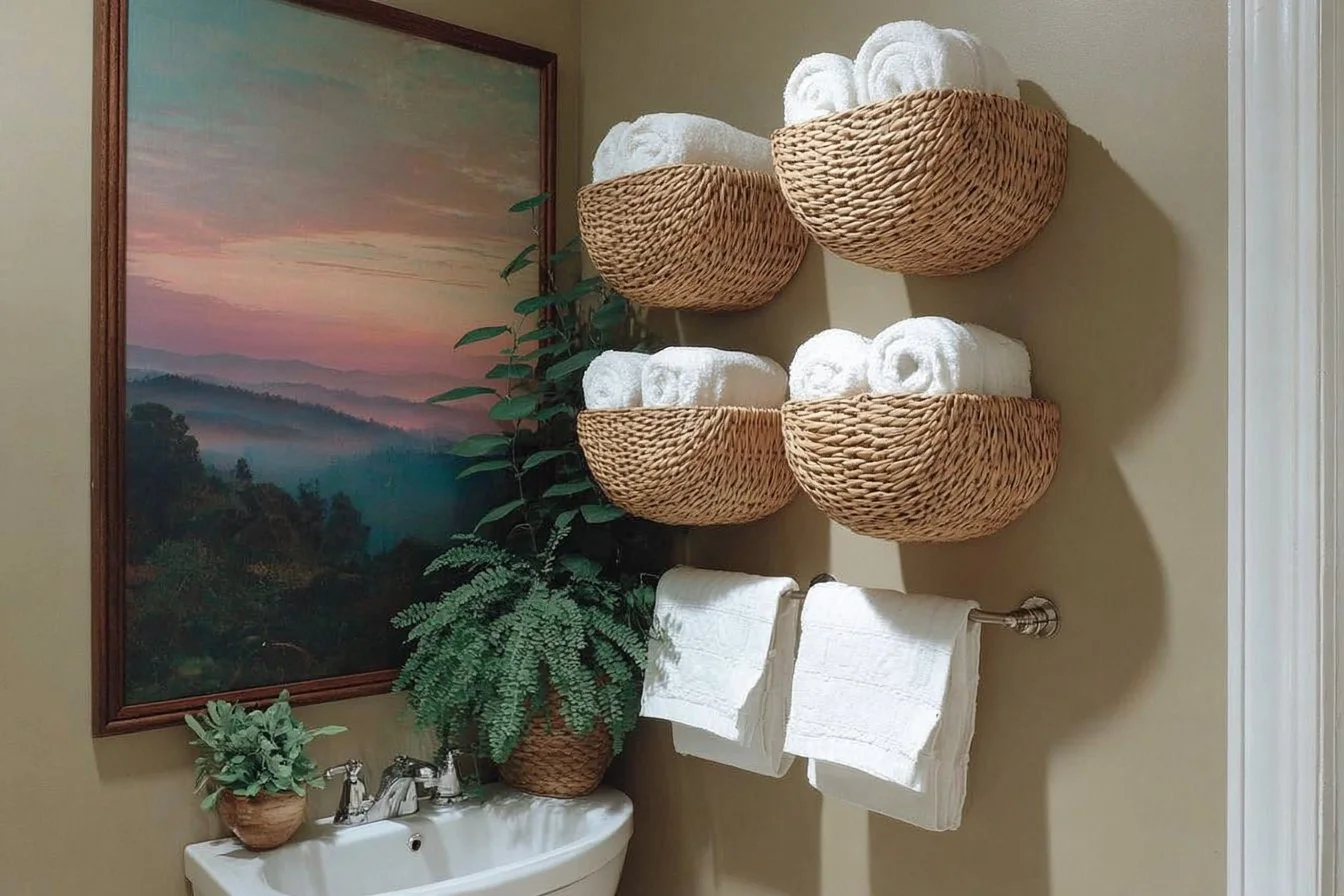
A woven basket of rolled towels blends storage with display and signals warmth to anyone stepping in after a swim or bath. Rolled towels invite use and are forgiving when kids grab one mid-morning while making a fort. From an emotional standpoint, the basket looks intentional and approachable, like a small hospitality gesture. Choose a shallow basket so colors and textures peek out, and rotate which towels you show based on laundry day. Place the basket near the bathtub edge or under the sink so it’s reachable for little hands. I often tuck a favorite storybook nearby when my son wants to linger during bath time, turning the towel basket into part of a comforting routine rather than mere decor. This approach marries decorating inspiration with family-friendly practicality.
3. Single Accent Towel for a Pop of Calm
Instead of bright patterns, pick a single accent towel in a muted tone that complements the room. A sage green or soft terracotta towel can add personality without overwhelming the minimalist palette. Emotionally, that single pop feels curated, like a quiet exhale in the room, which is welcome after a busy school morning. To apply this, reserve one towel hook or bar for the accent piece and keep surrounding linens neutral. Swap the accent seasonally or when you need a small refresh. I change ours when the kids start a new school term; the subtle shift feels like a reset. This technique matches home décor ideas that prioritize small, high-impact changes rather than large remodels.
4. A Leaning Ladder for Vertical Display
A slim leaning ladder offers vertical interest while keeping towels off counters and out of reach of sticky fingers. Ladders draw the eye up, making low-ceiling bathrooms feel more spacious, and present a layered visual that feels curated. Select a natural wood or matte metal ladder to keep lines clean and consistent with minimalist interior styling tips. Drape towels over rungs at varying heights so each color and texture shows; children can learn to hang towels at a specific rung, which helps keep things tidy. I placed ours beside the sink, and it became a simple command center—towels for drying, a small hook for my daughter’s swim goggles. For other small-home ideas, I once paired ladder styling with ceiling details inspired by stunning ceiling decor ideas that focused on vertical interest.
5. Minimal Hook Grouping for Everyday Use
Grouping a few slim hooks at arm height creates a clean, functional display that encourages each family member to claim a spot. Visually, hooks keep towels separated and flat, which reads neater than a pile. Hooks work well if you prefer open, airy walls and need quick access during hectic mornings. Install three or four hooks with equal spacing and choose finishes that match fixtures—brushed nickel, matte black, or warm brass. Teach kids to hang their towels by color or initial to make tidying part of the routine; it becomes a small family habit that reduces laundry chaos. I often leave a soft hand towel on the middle hook for guests, and the kids know their towel is the one with a tiny tag. This styling is practical and aligns with decorating inspiration that blends aesthetics and utility.
6. Tray Styling with a Towel and Greenery
A shallow tray on a counter or shelf that holds a folded hand towel, a small plant, and a ceramic soap pump introduces texture and life without clutter. The tray frames the towel, making the combination feel intentional rather than tossed. Greenery adds a refreshing note and connects indoor space with moments spent gardening or playing outside with neighbors. Use succulents or low-light plants that survive busy household rhythms, and rotate a scented soap to keep the space inviting after muddy soccer practices. Place the tray where curious hands can’t reach sharp items, and swap items as routines change—weekend mornings might feature a candle, while schooldays favor a small basket for hair ties. This approach brings together interior styling tips and everyday family habits for a calm, useful vignette.
Conclusion
If you want more thoughts on minimalist bathroom refreshes and practical touches that support busy family life, there are plenty of curated ideas to browse. For a collection of simple, space-conscious suggestions that pair well with the towel styling tips above, consider exploring 15 Minimalist Bathroom Design & Decor Ideas. Save your favorite looks, try one small change this week, and let these gentle updates become part of how your home feels each day.