I still remember hauling in a battered wicker basket from a neighborhood yard sale while my two kids argued about whose turn it was to feed the goldfish. As a forty-something mom, my days are a patchwork of school drop-offs, soccer snacks, and neighborhood playdates where we swap recipes and the best spots to thrift. The kids help me sort little finds—an old lamp here, a framed print there—and we turn those discoveries into small weekend projects. Sometimes we even make crafts together; my son loved a cardboard stars tutorial we tried for a cozy reading nook. Those imperfect pieces carry our stories, and slowly our house has become a warm mix of memories and style that feels both intentional and kind to the planet.
Mix Vintage and Modern for Visual Balance
Combining a sleek new sofa with a thrifted side table brings contrast that feels effortless. Visually, the old piece adds texture and history while the newer item keeps the room feeling fresh. Emotionally, vintage finds carry a story that sparks conversation when neighbors drop by for coffee, and kids love pointing out the “cool old stuff” they helped choose. To apply this at home, pick one major modern anchor like a sofa or rug, then layer in two or three secondhand accents—an end table, lamp, or mirror—to ground the look. Keep colors cohesive and let one vintage item be the focal point so the space reads as curated, not cluttered. This approach to home décor ideas makes every room feel edited and personal, and it’s easy to change out a thrifted piece when the mood shifts.
Upcycle Furniture to Extend Its Life
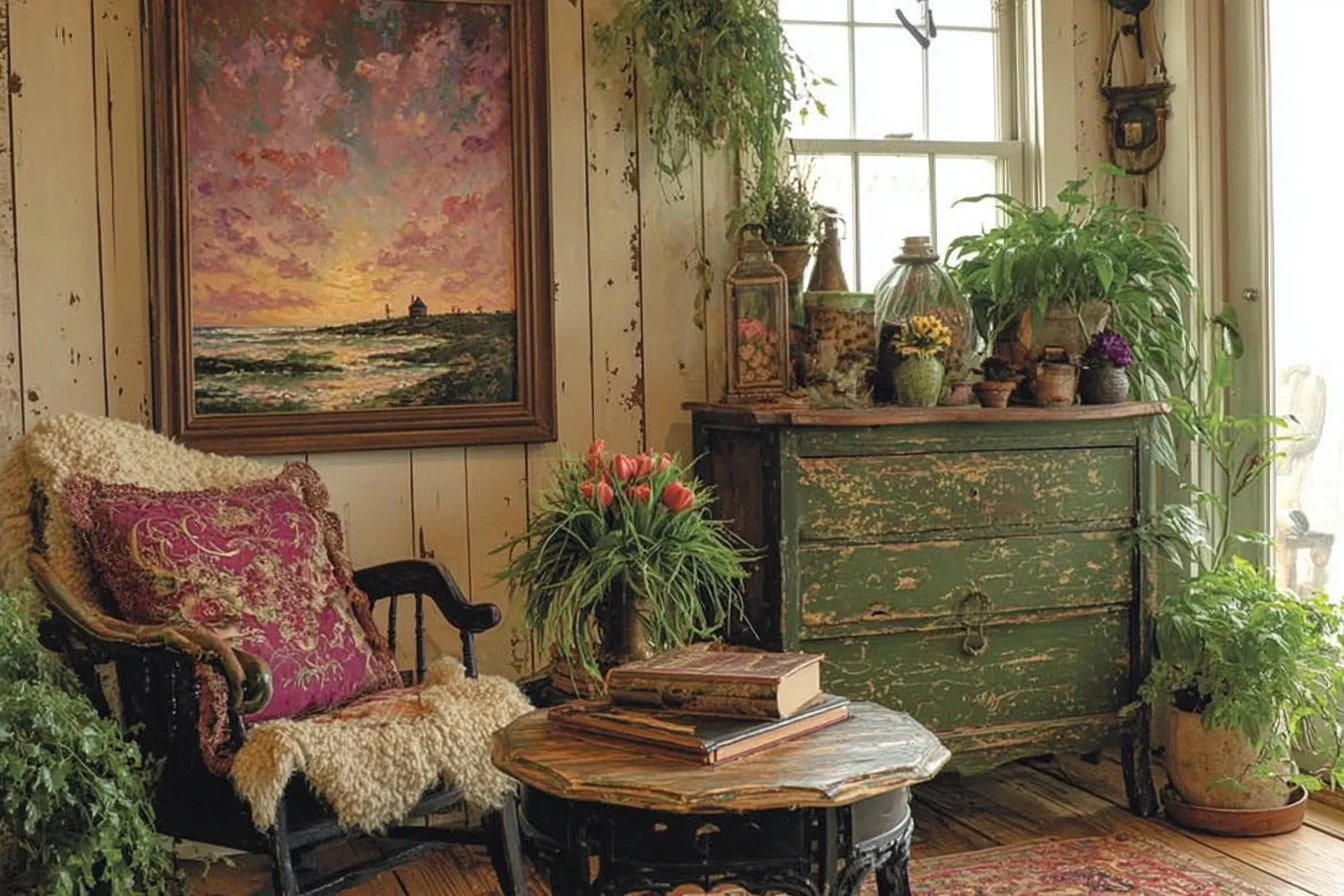
A chipped dresser can be a weekend hero with a little sanding, paint, and new hardware. Upcycling not only saves money, it reduces waste and makes each piece uniquely yours. Visually, painted mid-century chests or reupholstered chairs add personality and a handmade quality that mass-produced items can’t match. Start small: swap a drawer pull, paint inside the drawers a cheerful color, or replace upholstery with durable fabric that stands up to kids. Include your children in simple steps like choosing paint color or sanding under supervision; it becomes a family ritual and teaches care for belongings. These interior styling tips help you create functional pieces that reflect your family’s life while making decorating inspiration practical and achievable.
Curate Meaningful Displays Instead of Buying New
A shelf filled with thrifted vases, travel mementos, and an old cookbook feels intentional when every item has a story. Curating is about restraint: choose few items that complement each other in color or theme, then give them room to breathe. This method works visually because it creates focal points rather than visual noise. It works emotionally because those objects become memory anchors for bedtime stories and holiday memories with neighbors and cousins. To try it, dedicate one shelf or corner to a curated vignette and rotate items seasonally or as your kids bring home school art. Adding a handmade star or framed children’s drawing makes the space feel lived-in and loved, a subtle interior styling tip that supports both aesthetics and family life.
Layer Textiles for Instant Warmth and Comfort
Adding thrifted throws, cushions, and rugs softens a room and makes it inviting for homework sessions and movie nights. Textiles introduce patterns and texture that transform a cold space into a cozy one without major expense. Emotionally, soft layers invite cuddles during rainy evenings and give kids designated cozy spots for reading. Practically, mix different fabrics—linen, wool, cotton—in complementary colors and focus on touchable textures. Repurpose vintage blankets as chair throws, or upholster a footstool with an old curtain for an easy refresh. These decorating inspiration practices are budget-friendly and swap-friendly, so you can rotate pieces as tastes evolve without feeling wasteful.
Repurpose Glass, Ceramics, and Frames for Function
Clear glass jars from thrifts become herb planters on kitchen windowsills, and mismatched frames unite as a gallery wall that tells your family’s story. Repurposing gives objects practical life while contributing to a curated look. Visually, repeated shapes like similar frames or grouped jars create cohesion; emotionally, kids get excited seeing their art professionally displayed. Try grouping glass bottles of varying heights on a dining table with seasonal greenery, or turn a vintage frame into a family calendar. These small changes are perfect for busy moms who need decorating ideas that are low fuss but high impact. They blend utility and charm, giving every corner a purpose and a smile.
Brighten Rooms with Thrifted Lighting and Small Details
Swapping a dated lamp shade for a thrifted pendant or polishing a found brass lamp can change a room’s mood instantly. Good lighting enhances color, texture, and the atmosphere for family dinners and homework time. A secondhand lamp with a fresh shade becomes a focal point that elevates simple shelving or a reading nook. Small details like new switch plates, thrifted curtain rods, or vintage knobs add polish without the cost of a full redesign. Involve your kids: let them pick a playful shade for the playroom or a soft lamp for the bedside. These interior styling tips make decorating achievable in short bursts between school runs and soccer practice.
Conclusion
If you’re saving pins and planning a weekend hunt, remember small swaps and a little creativity add up to a home that feels both stylish and sustainable. Try one idea at a time, involve the kids in the choices, and enjoy the stories behind each find. For more inspiration on using secondhand materials in clever ways around the house, check out this helpful article about shopping secondhand for decor.