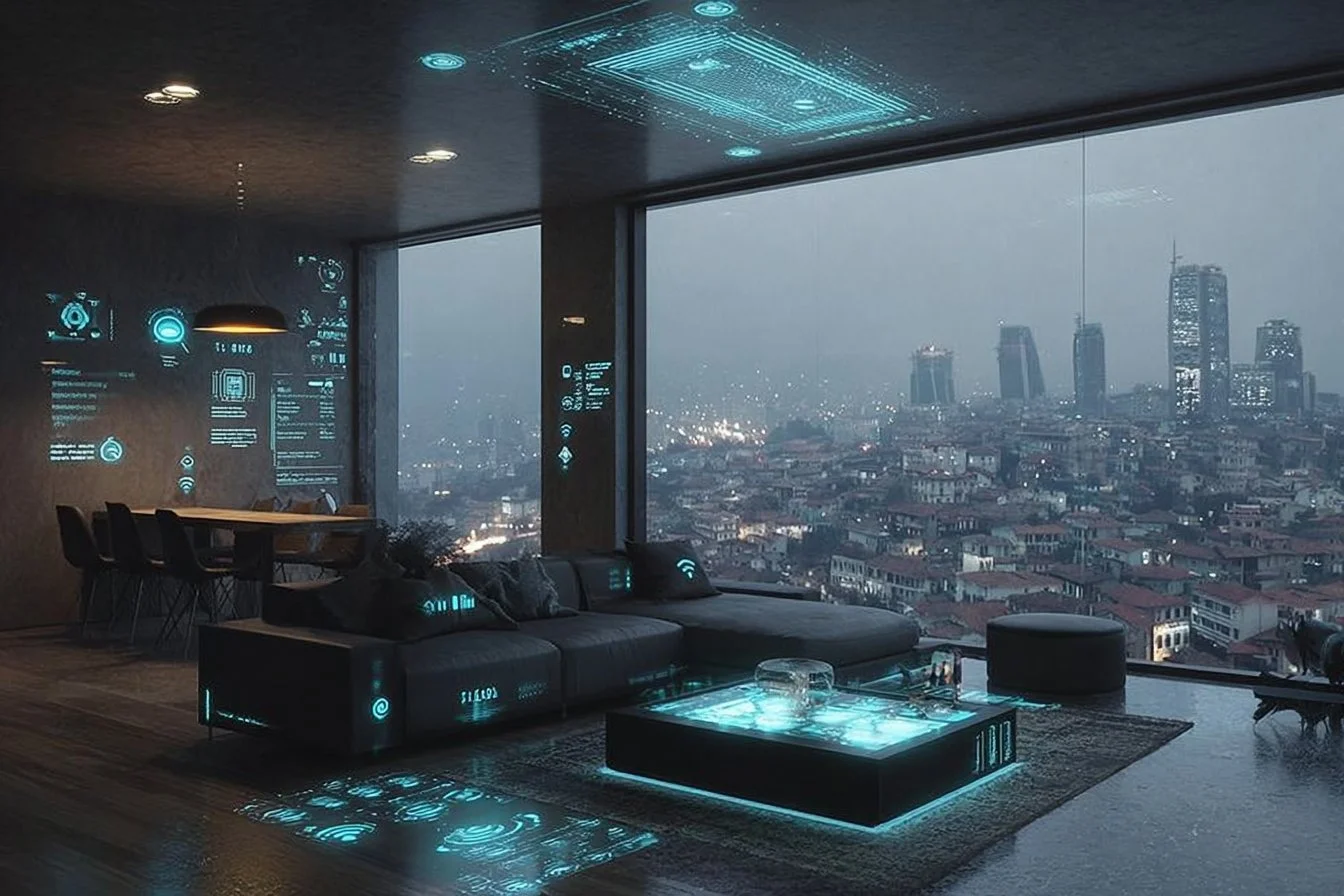
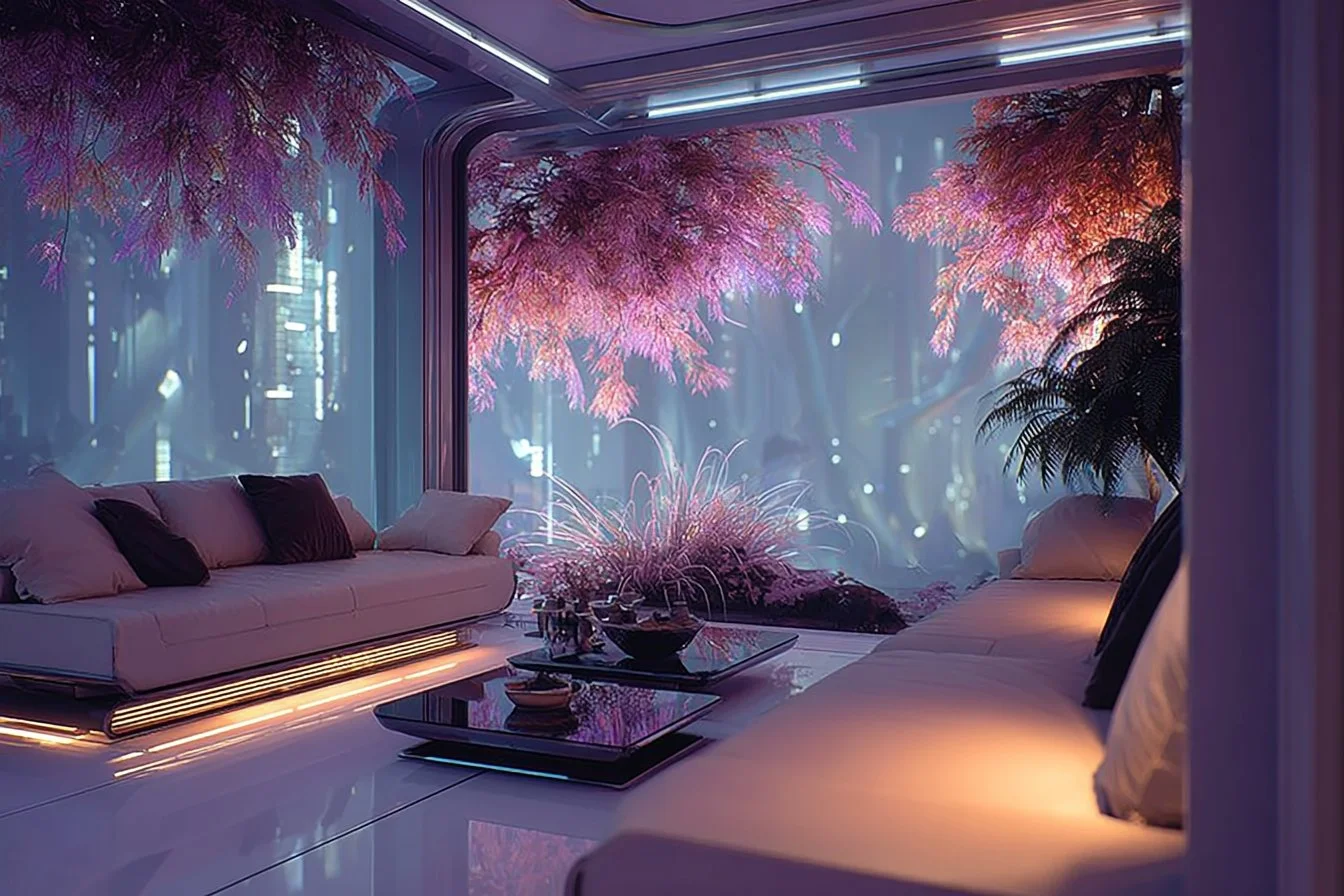
By mid-century the pulse of cities has changed. Neon no longer screams; it hums. Skyscrapers wear gardens like armor, drones move like schools of fish, and the personal is computational yet intimately human. “Cyberpunk Serenity” describes a future where hyperconnectivity and sensory richness meet deliberate design for calm: technology tuned to soothe as much as to amplify. This is not a retrofit of dystopia, but a reimagining of urban life where the gloss of cybernetics and the quiet of nature coexist.
The Skyline: Biophilic Neon
Futuristic skylines favor layered surfaces. Glass facades are studded with vertical parks and photochromic panels that soften glaring advertisements into slow-moving art. Neon persists, but it’s tempered—soft bands that cycle with circadian-aware lighting systems. Towers harvest wind, fog, and sunlight; integrated algae farms hum quietly behind semi-transparent OLED skins. At dusk, neighborhoods glow in palettes chosen by communal governance, creating a living chromatic map of the city’s moods.
Key features:
- Living facades and pocket forests embedded in high-rises
- Circadian lighting that adapts to seasons and sleep patterns
- Local microclimate controls reducing urban heat islands
Interiors: Calm in the Machine
Homes in 2050 are modular ecosystems. Adaptive surfaces regulate acoustics and temperature. Walls shift textures and opacity on demand, providing privacy without isolation. Minimalist design meets tactile richness—natural fibers are blended with smart textiles that respond to touch and biometric feedback, offering gentle haptic comforts when stress is detected.
Daily rituals include:
- A morning light sequence that blends filtered outdoor views, soft audio tones, and scent diffusers timed to metabolism
- Modular furniture that rearranges for social gatherings or solitary meditation
- Domestic AI assistants that prioritize wellbeing, not endless optimization
Mobility: Quiet, Connected Flow
Transportation is quieter, cleaner, and choreographed. Autonomous vehicles share lanes with light-rail pods and bike-carriage lanes. Mobility is a service rather than ownership: subscriptions let you summon the right vehicle for purpose—a silent glide for commuting, a slow landscaped tram for leisure. Low-altitude drones handle logistics with near-zero footprint, delivering goods to green hubs that redistribute items locally.
Impacts:
- Reduced need for parking creates space for community gardens
- Noise pollution drops, enhancing urban calm
- Real-time routing reduces congestion and idling
Augmented Reality, Subtle and Supportive
Rather than overlaying cities with invasive advertising, AR systems in this vision are opt-in and context-sensitive. Public AR gently annotates architecture with historical notes, highlights walking routes through cool microclimates, or surfaces directions for the visually impaired. Wearable displays and auditory interfaces prioritize unobtrusive, moment-aware information.
Design principles:
- Consent-first AR experiences
- Localized, peer-moderated content channels
- Emphasis on memory and place-making over commercial saturation
Health, Biotech, and Mental Space
Healthcare is ubiquitous but discreet. Wearables and implantables track physiology and mental state, but community norms limit surveillance: data is encrypted, aggregated, and only shared with explicit consent. Preventive care is cultural—neighborhood coaches and personalized mental-health AIs create early interventions. Psychedelic-analog therapies and soundscape immersion rooms are regulated, therapeutic tools that help people process living in constant flux.
Ethical priorities:
- User-owned health records
- Community oversight of biotech deployments
- Accessible mental health services integrated into daily infrastructure
Governance, Privacy, and Commons
Cyberpunk Serenity depends on new governance models. Cities employ digital twins to simulate changes before implementation, with citizens participating through deliberative platforms. Privacy is treated as a public good: data trusts, local commons, and privacy-by-design technologies ensure that personal information fuels services without exploitation.
Elements of governance:
- Participatory budgeting via secure, verifiable voting systems
- Data cooperatives controlling local economic flows
- Zoning that enshrines mixed-use, human-scale neighborhoods
Culture: Art, Nightlife, and Ritual
Art is ambient and participatory. Projection gardens host immersive theater under bioluminescent trees. Nightlife becomes non-binary—quiet clubs for sound healing sit beside high-energy synth havens. Street markets blend artisanal craft with digital production: bioprinted ceramics, handwoven circuits, and live-coding musicians collaborating with AI improvisers. Community rituals—shared meals, lantern floats, AR memory walks—anchor people to place.
DIY, Repair, and the Maker Ethos
The maker movement matures into an essential civic skill. Repair cafes are neighborhood institutions, and local labs produce everything from personalized exosuits to edible packaging. Open-source hardware and transparent supply chains reinforce resilience. This ethos resists disposable consumerism, extracting serenity from autonomy and creativity.
A Short Vignette
Lina steps into the morning atrium of her building. The glass blooms open to a vernal scent as sunlight filtered through algae panels warms the room. Her morning AI suggests a walking route that winds through a canopy corridor—less traffic noise, more songbirds. At noon she joins a communal cooking pod on the rooftop where neighbors trade recipes and data on local plantings. At night, she attends a small performance: an augmented shadow dance projected onto living vines, the soundtrack tuned to the neighborhood’s heartbeat—measured, consented, communal.
Conclusion
For storytellers, designers, and gamers imagining 2050’s blend of neon and moss, the future is rich with narrative potential—sometimes edging into cosmic curiosities that mix urban futures with eerie otherworldly themes. If you’re interested in a tabletop exploration that marries futuristic cityscapes with darker, whispering mysteries, consider exploring Cthulhu 2050: Whispers Beyond The Stars by OtherWorlds.