









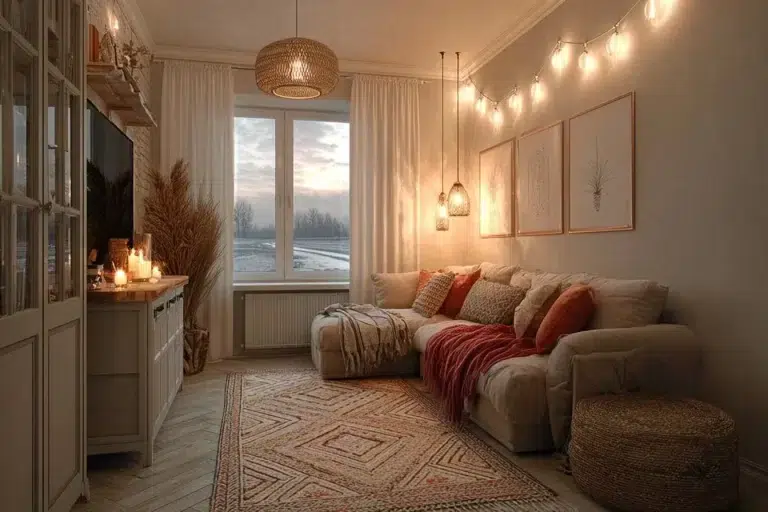

Tiny Living, Big Warmth: Create an Inviting Family Room
I still remember the first autumn we moved into our little bungalow — backpacks lined by the door, a soccer ball in the hallway, and two kids arguing over the TV remote while I tried to fold laundry on the couch. Between school runs, PTA meetings, and neighborhood block parties, our living room became the house’s heartbeat: where homework got done, secrets were whispered, and sleepy movie nights happened. Those everyday moments taught me that a small space doesn’t need to be loud to feel full; it simply needs to feel intentional. Over time I gathered simple home décor ideas and interior styling tips that made our compact sitting area feel like an embrace at the end of a long day. If you love practical decorating inspiration that works for active families, start here and peek at a few of my favorite cozy heartfelt decor ideas that inspired our first cozy refresh.
Layered Textiles for Soft Warmth
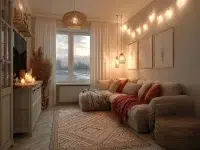
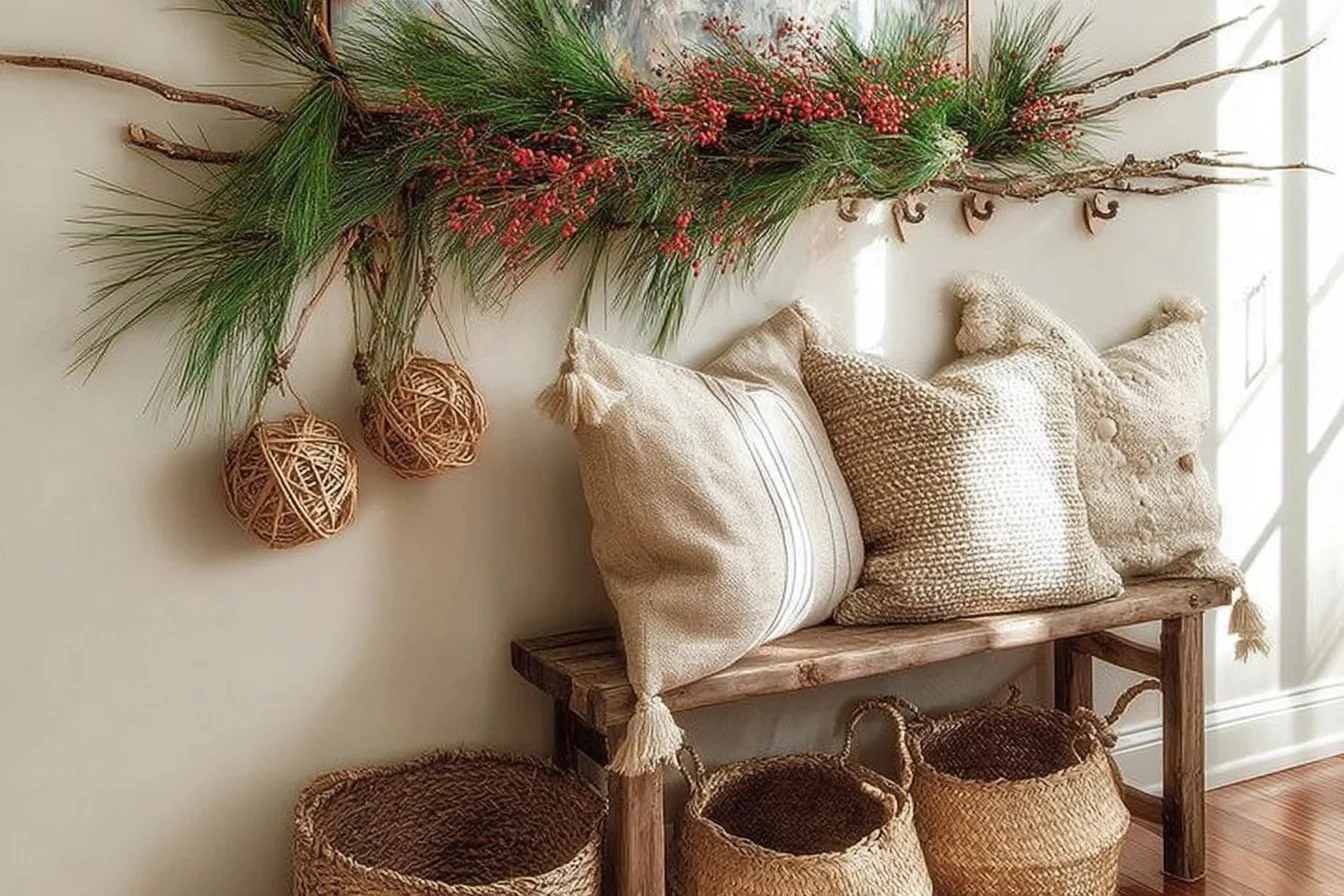
Layering fabrics turns a tight living area into a tactile retreat. Think plush throws over a slim sofa, a weighted cotton throw for movie nights, and a low-pile rug that defines the sitting area without overwhelming the floor. Visually, textiles add depth and tone — they break up clean lines and invite people to linger. Emotionally, a stack of soft pillows becomes a signal that this is a pause spot: for reading with a child, for a neighbor to drop by with coffee, or for a rainy afternoon of board games.
Practically, choose washable fabrics in kid-friendly blends and rotate pieces seasonally so nothing feels stale. Mix patterns in the same color family to keep the look cohesive; a striped lumbar pillow plus a subtle floral cushion works beautifully without shouting. For houses with active children, keep a designated basket for cozy blankets so they’re always within reach but easy to tidy when company arrives.
Smart Furniture That Fits and Feels
In compact rooms, furniture must multitask and feel proportionate. A narrow loveseat paired with an ottoman that doubles as toy storage keeps sightlines open while hiding clutter. Low-profile sofas preserve a sense of vertical space, and furniture on casters can be rearranged for homework help or impromptu playdates. Choosing pieces with exposed legs also creates an airy silhouette that tricks the eye into seeing more room.
Emotionally, furniture that’s scaled to the family invites everyone in — my kids can curl up beside me during storytime, and there’s still space for a friend who pops over after school. When buying, measure for clear walking paths and imagine daily routines: snack time, a craft afternoon, or folding laundry during commercials. These interior styling tips make a small space feel deliberate rather than cramped, and they provide practical zones without sacrificing style.
Light That Hugs: Warm Lighting Tricks
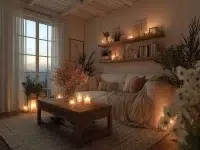
Lighting transforms mood more than color does. Swap harsh overhead bulbs for layered illumination: a warm-toned floor lamp for reading, table lamps on side tables for soft glow, and dimmable fixtures for evening wind-downs. A string of low-profile sconces or plug-in wall lights can add ambient layers without complex wiring, perfect for weekday evenings when homework and dinners blend into family time.
Visually, warm light makes textures sing and skin tones look more flattering — ideal for cozy conversations after school drop-offs. Emotionally, the right light can make a tired space feel rejuvenated; I remember how a single lamp changed our evenings from frazzled to serene. For practicality, choose energy-efficient bulbs with a 2700K–3000K temperature and place lamps at multiple levels so the room never feels flat. These small adjustments are some of the most effective decorating inspiration for family-focused rooms.
Palette of Gentle Neutrals with Pops
A soft, neutral palette creates a calming backdrop that amplifies small spaces. Warm beiges, muted greiges, and soft whites unify the room and reflect light, making corners feel less confined. Instead of stark monochrome, introduce personality with deliberate pops: a mustard throw pillow, a slate-blue vase, or artwork your kids helped pick. These accents give the room life while keeping the overall feel serene.
Why it works: neutrals act like a visual hug, easing transitions between the living area and kitchen or hallway. For families, practical durability matters — pick mid-tone finishes that hide fingerprints and scuffs while letting accent colors shine. I mixed washable slipcovers and an accent armchair we scored at a thrift sale; neighbors compliment it, and my daughter claims it for afternoon reading. These decorating inspiration choices are forgiving, stylish, and rooted in real household rhythms.
Textural Walls and Family-Friendly Art
Walls are blank canvases for adding tactile interest without eating floor space. Consider a subtle grasscloth wallpaper on an accent wall, beadboard behind the TV, or a linen-wrapped pinboard where kids can pin drawings. Textural walls create warmth through depth rather than color, making a compact room feel intentional and curated.
Pair textures with family-friendly art: framed school projects, a rotating gallery of watercolor experiments, or a woven wall hanging that doubles as a conversation starter for visiting grandparents. Emotionally, seeing your kids’ work displayed elevates ordinary days and strengthens that sense of home. Practically, use lightweight frames and removable hanging hardware so you can swap pieces easily; little changes keep the room feeling fresh through each stage of your children’s growth.
Nooks & Multipurpose Zones for Togetherness
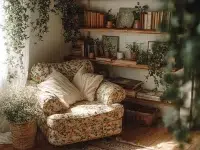
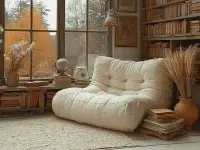
Small rooms benefit from clearly defined micro-zones: a reading nook by the window, a homework corner with a slim desk, and a game zone with a low storage bench. These areas let family members coexist without stepping on each other — homework can happen beside movie prep, and quiet time can live alongside afternoon play. Use a consistent color thread or matching baskets to visually tie zones together so the space feels united.
From a practical angle, furniture that serves double duty — a bench that stores blankets, a coffee table with hidden compartments — supports busy routines. I carved out a tiny craft table for my younger one, and it became the household’s creativity hub: homework sometimes migrates there, and neighbors’ kids often gather for playdates. These interior styling tips maximize function while keeping the room warm and lived-in.
Conclusion
If you’d like more ways to layer warmth into tight spaces, this round-up of ideas can be a gentle starting point for your next refresh. Save the ideas that resonate, try one change at a time, and come back to tweak them as your family’s routines evolve. For extra inspiration that guided some of our choices, see this collection of inviting and cozy living room ideas that blend comfort with real-life practicality.