I still remember the year my youngest declared the living room “too plain for a party” the week before Valentine’s Day. Between school carpools, piano practice, and folding laundry on the kitchen island, those small moments of whimsy feel like mini rebellions against routine. Our neighbors always comment on how the front porch looks when I light a string of warm bulbs, and my kids love making little crafts from scraps they find in my sewing basket. Those evenings—pizza at the table, kids comparing silly heart drawings—are the reason I try to keep things simple, meaningful, and kind to the planet. Turning everyday items into something festive lets us celebrate love without the clutter or the guilt, and the process becomes part of our family rhythm rather than another to-do.
Upcycled Centerpieces That Tell a Story
A cluster of repurposed jars and bottles creates an intimate table scene with very little expense. Mason jars, leftover wine bottles, or even baby food jars cleaned and grouped on a wooden tray catch candlelight beautifully and bring a cozy, handmade vibe. Visually, the mismatched glass adds texture and warmth, while emotionally it signals care and resourcefulness—perfect for homes that value memories over mass-produced items. To apply this at home, collect glass containers over a few weeks, tie them with twine or a strip of an old sweater, and arrange with a few stems of dried flowers or rosemary from the garden. My kids love hunting for the “perfect jar,” which turns prep into a family game and keeps decorating stress-free. This kind of centerpiece blends practical interior styling tips with real-life family rituals.
Fabric Hearts and Banners from Old Clothes
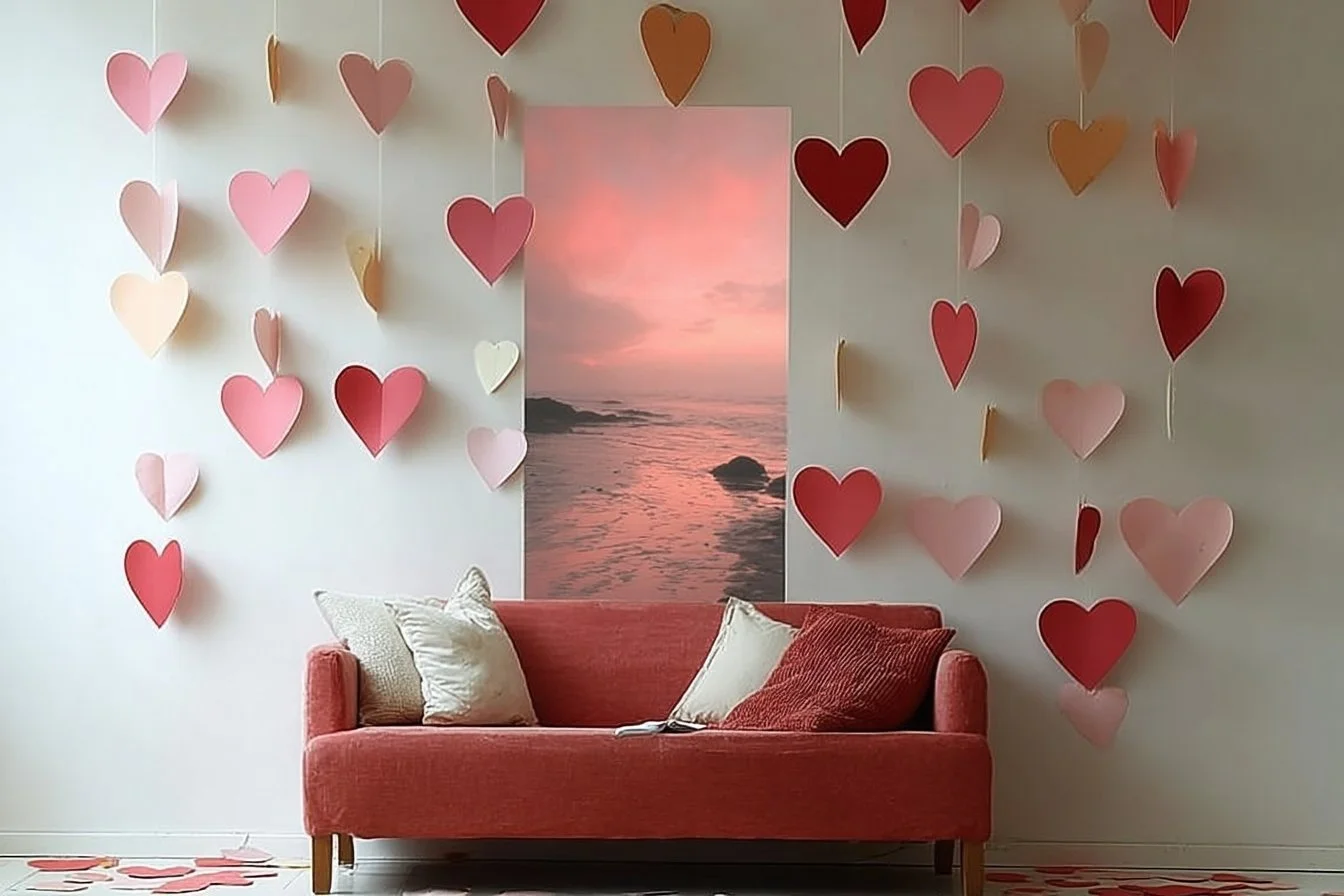
Transforming worn tees and scraps into heart banners or garlands gives new life to textiles and creates soft, kid-friendly decor. Fabric hearts stitched or hot-glued to a ribbon look layered and tactile when hung over a mantel or across a window. Visually, they soften a room and add homey color; emotionally, they carry family history when made from dad’s old flannel or a child’s first concert tee. To do this at home, trace heart shapes onto doubled fabric, sew around the edges, and stuff lightly with leftover batting. Invite the kids to draw or write small messages on some hearts for a personalized touch. These simple fabric projects fit perfectly with home décor ideas that favor sustainability and hands-on crafting, while doubling as keepsakes you’ll pull out year after year.
Dried Flower Garlands and Natural Confetti
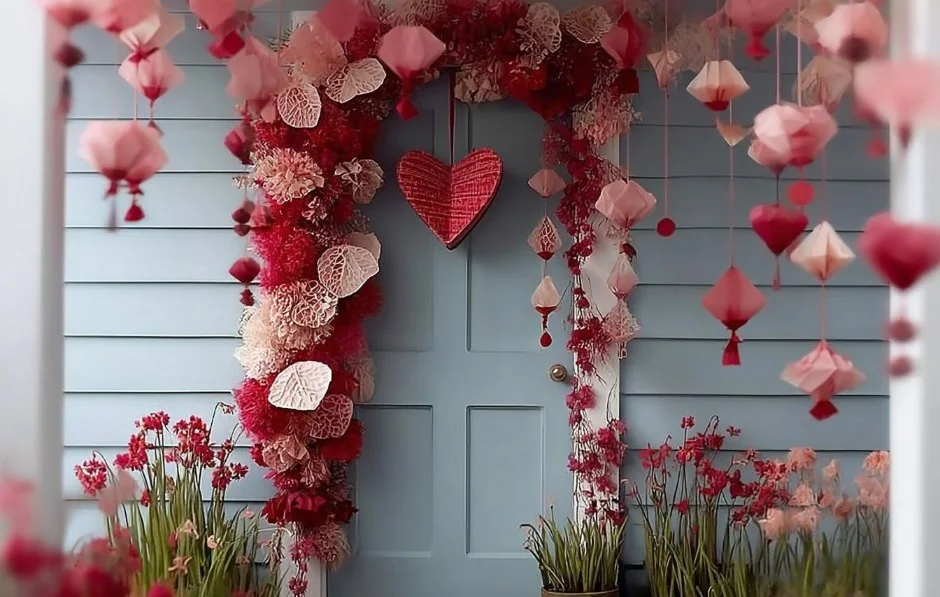
Dried flowers and petals offer delicate color without the waste of single-use blooms. A strand of dried lavender, baby’s breath, or rosebuds strung together becomes a fragrant garland for a doorway or headboard and lasts for months. Using dried botanicals also creates a soft, organic palette that complements neutral interiors and hand-made elements. At home, hang a short garland over the dinner table or drape it along a bookshelf; save leftover petals to sprinkle as natural confetti for a dessert reveal that won’t leave a plastic mess. My neighbor’s mother taught me how to hang herbs upside down to dry, and now the kids help clip stems after we trim the garden—an easy way to involve little hands and teach them about reuse while adding subtle decorating inspiration to our rooms.
Beeswax Candles and Reusable Textile Accents
Natural beeswax candles and cloth table runners instantly elevate a small celebration. Beeswax offers a warm glow and subtle scent that feels both luxe and low-impact compared to paraffin alternatives. Pair a few short beeswax pillars on a reclaimed tray with a reusable fabric table runner made from an old sheet or linen napkins for a layered, cohesive look. This combination is visually balanced and emotionally calming, encouraging slower, more mindful moments around the table. At home, swap disposable napkins for cloth, and teach the kids how to fold napkins into simple shapes—an easy interior styling tip that doubles as a family activity. Over time, these textiles become part of your home’s story, aligning your decorating inspiration with habits that reduce waste and add meaning.
Living Gifts and Photo-Forward Displays
Instead of disposable accents, use living plants and family photos to express sentiment and style. Small potted succulents or herb starters make sweet table favors, and a reclaimed wood frame with family snapshots arranged like a Valentine collage creates a personal focal point. Visually, greenery brings life and contrast to softer Valentine hues, and photos anchor the decoration in real-life relationships. At home, encourage the kids to pick a favorite photo to include on the display, or let them decorate plant tags with markers. This approach blends gifting with home décor ideas, giving guests something they can take home or enjoy for weeks. It’s a practical way to showcase love without excess, and it turns decorating into a story the whole family knows.
Conclusion
If you leave the room with anything, let it be the memory of making something together rather than buying a moment. These eco-conscious touches—whether a dried flower garland, an upcycled centerpiece, or a fabric heart from an old shirt—bring warmth, reduce waste, and fit easily into family life. Save the ideas that speak to you, try one project with your kids this week, and come back when you’re ready for more decorating inspiration and interior styling tips. For simple, thoughtful finds that pair well with homemade touches, I often browse Hallmark’s home decor collection for ideas that complement sustainable decorating choices.