
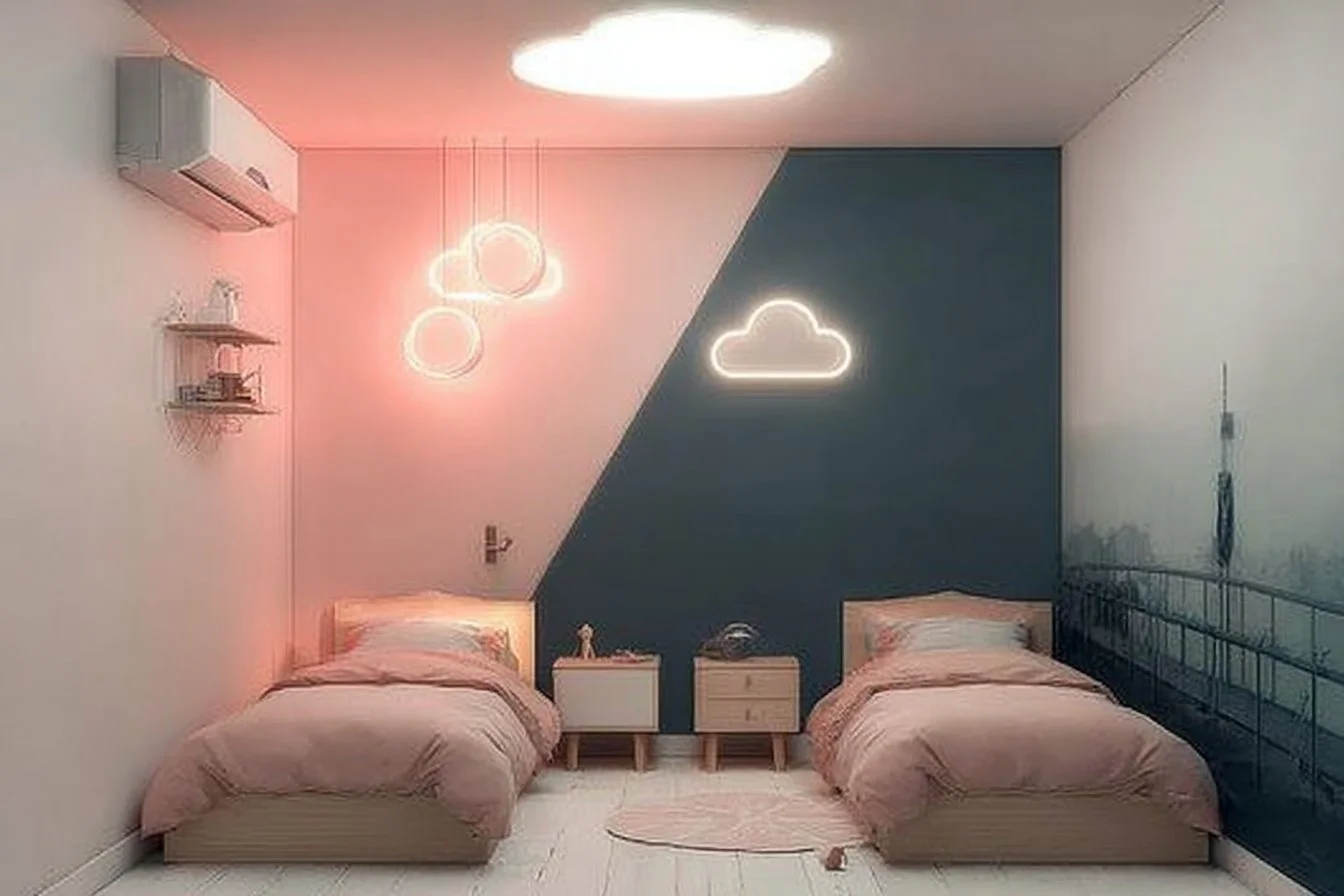
Some nights I linger in the doorway, watching my two kids — one who hoards books and one who sleeps with a flashlight — trade whispers over a blanket that smells like summer. Being a mom in my forties, I have a file in my head of small neighbor barbecues, school morning chaos, and the way our house fills up with homework and snack crumbs. Our shared bedroom is where homework turns into giggles and where scraped knees get patched between bedtime stories. I’ve learned that thoughtful touches can calm the chaos and make room for both personalities without sacrificing sleep or style. Those gentle changes are the kind that stick, the kind neighbors ask about, and the kind family photos remember. If you love easy home décor ideas that work for real life, you will find this practical, cozy guide helpful. For ideas on calming palettes that translate to every age, see these cozy calm bedroom ideas.
-
Zoning with Bunks and Loft Beds
A loft or bunk approach creates distinct zones for sleep, play, and study while freeing floor space for toys and running shoes. This design works because vertical space is often underused, and lifting one bed opens room for a desk or a reading nook underneath. At home, choose a solid ladder and guardrails for safety, and add a soft rug beneath the loft to warm the footprint. Paint the underside of the loft in a soft color or add string lights to make it feel like a secret fort. For us, the lower bunk became a homework station on weekdays and an afternoon reading den on weekends, giving both kids a sense of ownership without arguments over territory. This idea blends clever interior styling tips with practical safety choices to keep energy focused and clutter minimized.
-
Neutral Base with Colorful Kid Zones
Starting with a neutral palette gives the room longevity and makes it easy to introduce personal color choices that change as kids grow. Neutral walls, bedding, and a shared rug form a calm canvas that visually enlarges the room, while the kids pick accent colors through pillows, wall decals, or desk lamps. This works well because it reduces visual conflict and makes cleaning up feel less chaotic. To apply this, paint walls in a warm off-white or pale gray and add two accent corners with removable peel-and-stick wallpaper or decals—one side blue-green, the other coral or lavender. Switch out accents seasonally or as tastes change for a quick refresh. Families with tight schedules will appreciate how this approach streamlines decision making and keeps the space feeling curated. For a refined twist on neutral styling, peek at some luxury modern Japandi ideas that translate beautifully into kid-friendly versions.
-
Smart Storage That Grows with Them
Storage is the unsung hero of shared rooms. Built-in drawers under beds, labeled bins, and cubbies keep toys, art supplies, and seasonal clothes organized without overwhelming the room. The reason this idea works is that accessible storage teaches kids to put things away while giving each child responsibility over their own space. At home, use low open shelving for daily items and higher closed storage for less-used belongings. Color-code baskets or add name tags so each child recognizes their zone. My neighbor swears by rolling bins that slide under beds for sleepover gear, which made our own sleepover hosting smoother. This storage approach supports routine and reduces nightly battles, and it provides many opportunities for subtle decorating inspiration when baskets and bins match the room’s palette.
-
Personalized Display Walls for Identity and Pride
A shared room can celebrate differences with two mini gallery walls. One wall can showcase sports posters, sculptures, or a corkboard of homework, while the other displays drawings, favorite photos, and trophies. This approach works because it honors individuality without carving the room into permanent halves. To apply, measure two equal wall sections and install picture rails or floating shelves so the displays can evolve without extra holes in the wall. Encourage the kids to curate their own area and switch pieces every few months. I remember how proud my daughter was the first time she rearranged her shelf; it became a confidence builder and a weekend project the whole family enjoyed. Personalized displays bring decorating inspiration into day-to-day life and invite visitors to learn about each child’s interests.
-
Curtains, Rugs, and Color Blocking to Create Separate Feelings
You can create the illusion of separate rooms without construction by using curtains, rugs, and color blocks. This works because visual and textile boundaries give each child a private nook while maintaining the flexibility of a shared space. For application, hang light, noise-dampening curtains on a ceiling track that can be pulled between bunks or reading corners. Choose area rugs with different patterns or color tones under each bed to define sleeping spaces. Add a shared lamp and a small divider shelf that opens on both sides for toys and bedside books. In our household, a simple curtain became a stage for play and an instant privacy retreat for teens during study season. These small fixes are easy to update and align with popular home décor ideas that keep function at the forefront.
-
Creative Study and Play Zones that Adapt
A shared desk or two side-by-side workstations with privacy dividers help siblings focus while keeping a sense of togetherness. This layout works because it teaches collaboration and boundaries at the same time. At home, pick a long table with adjustable chairs and add clip-on lamps for individual lighting. Use magnetic boards or chalk paint sections above each work area so study tools live vertically and desks stay clear. For younger kids, integrate a play surface that doubles as a craft table with wipe-clean tops. Our Friday craft nights moved smoothly when each kid had their own pegboard for art supplies and a communal jar for shared markers. These functional touches make homework less stressful and offer a steady stream of interior styling tips that parents can tweak as kids mature.
Conclusion
Designing a shared bedroom for a girl and boy is about blending practical solutions with spaces that reflect each child. Save your favorite idea, try one change at a time, and revisit what works as kids grow. For more practical and creative options, check out 24 Ideas for Designing Shared Kids Rooms to spark additional decorating inspiration and home décor ideas you can adapt easily. Pin a few looks, involve the kids, and enjoy the process of building a room that holds memories.