Categories
Valentine’s Day

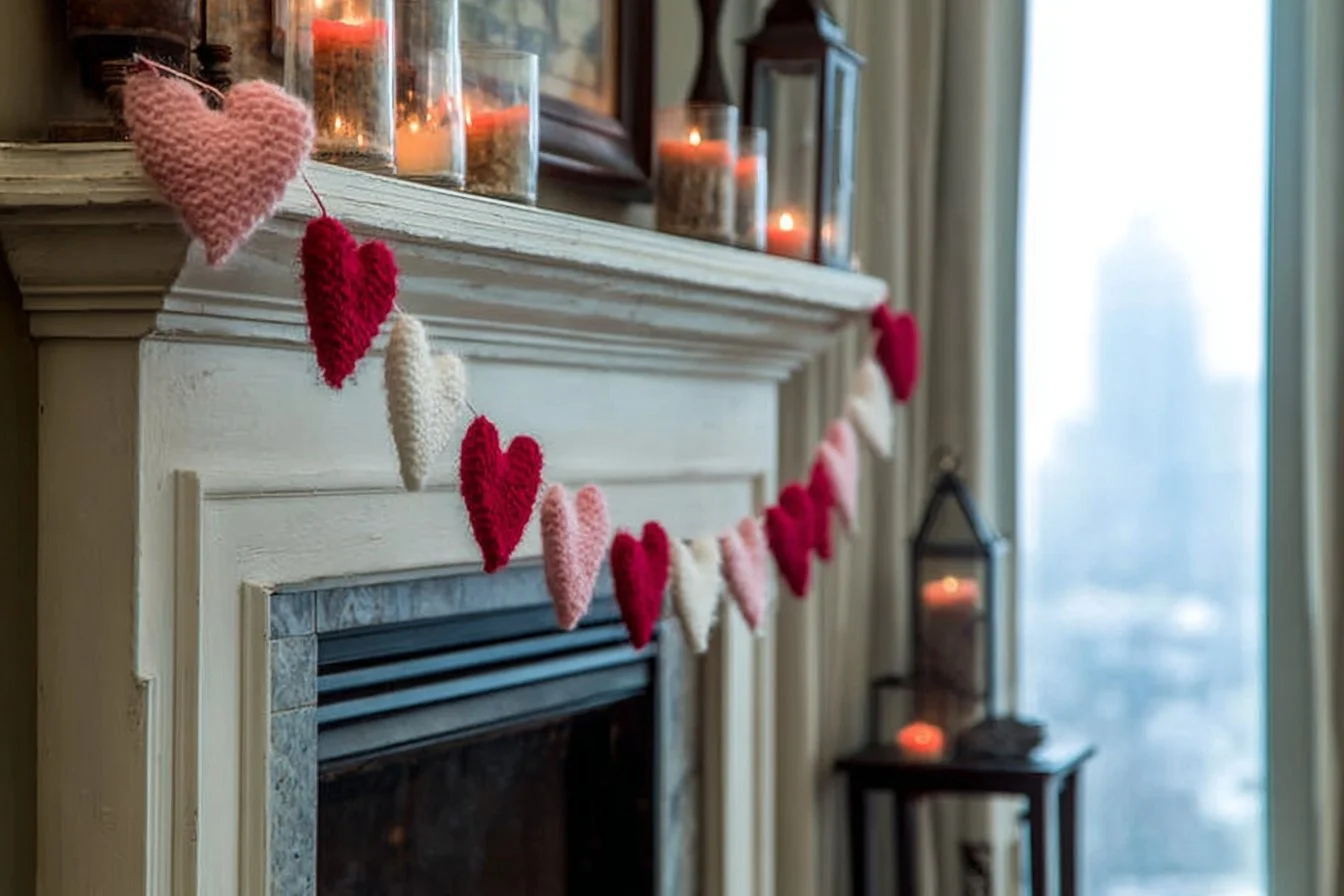
Charming Heart Crafts to Make and Sell

I remember juggling school drop-offs and neighborhood playdates while standing at my kitchen counter, a coffee cooling beside a pile of construction paper and ribbon. As a forty-something mom with two kids aged eight and twelve, our evenings are a flurry of homework, piano practice, and the comforting chaos of family life. Neighbors stop by with cookie swaps and small requests for last-minute party decor, and I often find myself turning simple craft sessions into tiny business opportunities between school runs. Those moments of folding, stamping, and laughing with my kids taught me how easy it is to transform homemade touches into lovely home accents. If you want low-cost projects that feel personal yet sell well, start with ideas that blend family warmth and practical decorating inspiration — and yes, a few of our favorites are even kid-friendly and help cover craft supply costs. For more inspiration, check out this best Valentine crafts to sell that helped me refine my offerings.

Heart Wall Art & Banners

Create reclaimed wood heart signs, layered paper heart collages, or embroidered heart hoops to add instant charm to a room. These pieces work visually because they introduce a focal shape and warm color that draws the eye without overwhelming a space. Emotionally, heart art reads as personal and nostalgic; it evokes family ties and little celebrations, which is exactly what buyers want for their own living rooms or nurseries. At home, make a simple version by distressing scrap wood, painting a muted pink or deep red, and finishing with a clear coat for durability. My kids love helping with sanding or punching paper hearts, which keeps them involved and makes the final product feel proudly collaborative. These items fit seamlessly into home décor ideas and can be photographed in a cozy setting to appeal to shoppers looking for handmade interior styling tips.

Handmade Cards & Gift Tags

Personalized layered cards, pressed-flower cards, and hand-stamped gift tags are tiny treasures that sell in volume. They work because people buy items that help them express feelings without a lot of fuss; a handcrafted card feels thoughtful and intentional. Visually, the texture from layered paper and pressed blooms provides depth that photographs beautifully for online listings and social feeds. To make them at home, set up a small workstation with quality cardstock, a few stamps, and a flower press or a low-heat hairdryer to quickly flatten petals. These projects are perfect for involving young kids—my eight-year-old loves tracing hearts while my twelve-year-old helps choose color palettes—so you can both create and teach basic crafting skills. If you need more kid-friendly project ideas to sell or gift, this resource about holiday crafts for kids gave our family a few fresh concepts.

Scented & Decorative Candles

Scented soy heart candles, layered votives in heart molds, and candle sets with decorative wraps make lovely impulse buys. Candles appeal because they engage scent, sight, and atmosphere—adding immediate coziness to a room and creating a memory tied to an interior moment. They photograph well on mantelpieces, side tables, or window sills, tapping into interior styling tips buyers search for. At home, you can melt soy wax in a double boiler, add essential oils like vanilla or rose, and pour into heart-shaped molds lined with simple labels or twine ties. Keep safety in mind by testing burn times and listing clear care instructions. My husband often lights a sample candle in the evening, and neighbors have praised how our small batches make their houses feel instantly more welcoming. Packaged with a handwritten note, these candles feel like tiny acts of warmth customers are happy to gift.

Soft Goods: Pillows, Towels, and Wearables

Hand-printed heart pillows, embroidered tea towels, and felt heart brooches blend function with sentiment and suit many home décor ideas. Soft goods work because they integrate into everyday life—pillows add a pop of color to a sofa while towels and brooches become practical keepsakes. Textures and fabric choice make these items appealing to customers who value tactile quality and longevity. To make them at home, invest in a small heat transfer printer or use block printing for a rustic look; a simple running stitch or felt applique can elevate a basic muslin pillow into a boutique piece. My kids love testing pillow placements during our living room rearranges, and a neighbor once bought several embroidered towels after seeing them hanging in my kitchen. These projects are ideal for sellers who want to combine interior styling tips with handmade charm.

Table Decor, Tags, and Tiny Gifts

Create mason jar vases wrapped in twine and ribbon, hand-painted heart coasters, polymer clay heart ornaments, or curated treat jars for quick giftable items. Table decor and small gifts succeed because they are easy to display in homes and make great last-minute presents that feel thoughtful. The visual appeal comes from coordinated palettes and simple repetition—matching coasters with a centerpiece creates harmony that appeals to shoppers seeking decorating inspiration. At home, assemble bundles by arranging coasters on a styled table with a small vase and a note about care. My kids help package treat jars after school, tying ribbons and adding stickers, turning evening craft time into a mini assembly line that teaches responsibility and entrepreneurship. These compact products are perfect for online shops and local markets since they ship easily and photograph well in lifestyle settings.

Conclusion

If you want to sell handmade items that fit into everyday rooms, focus on projects that combine visual appeal and emotional warmth—those qualities drive both impulse buys and repeat customers. Save a few of these ideas to try on a quiet afternoon, involve your kids for extra help and memories, and watch how small, thoughtful pieces can refresh a home and your income stream. For a curated list of proven projects you can make and sell, I found this roundup especially helpful: The Best Valentine’s Day Crafts to Make & Sell – What Mommy Does.
Categories
Kitchen

Glow Up Your Kitchen Island With Perfect Lights

I still remember the Saturday when my youngest scraped a knee under the island and my oldest insisted we bake cookies for the neighbor’s fundraiser, all while I tried to finish a work call. Our kitchen is the center of everything: homework sprawled across the counter, lunchboxes by the sink, and that warm gossip from Mrs. Henderson over the fence. As a forty-something mom with kids aged 8 and 12, I want a space that’s practical for weekday chaos and welcoming when friends drop by for a last-minute playdate. Small touches have made a big difference in how the room feels, from soft textiles to lighting that makes even rushed breakfasts look intentional. If you love cozy, lived-in style, you might also enjoy some of my other favorite room-transforming ideas for a cozier home that pair beautifully with the right kitchen island lighting.

Statement Pendants: Make Your Island the Heart of the Room

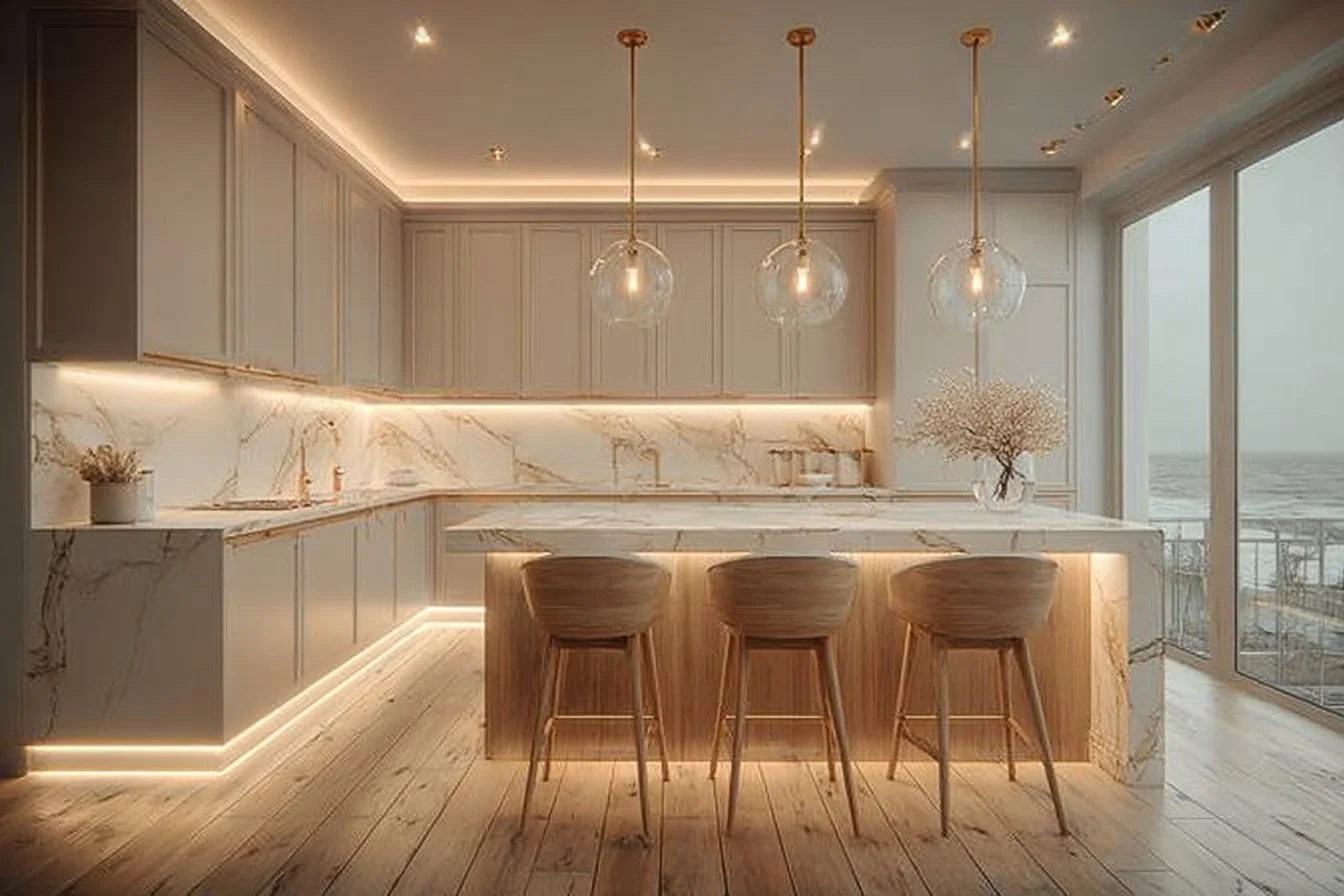
Pendant lights create an instant focal point and give your kitchen personality without overwhelming the family routine. A bold pendant or a cluster of varying shapes can anchor the island visually, helping the space feel designed rather than accidental. For emotional impact, choose warm finishes and soft glass that cast a friendly glow while kids do homework. Practically, position pendants so they illuminate prep areas without casting harsh shadows on the counter where your 12-year-old chops vegetables for dinner. For scaling, make sure the bottom of a pendant sits about 30 to 36 inches above the island surface in most homes; this keeps the light accessible to the eyes without blocking conversation across the island. Hanging a pendant that reflects your family’s style — whether vintage brass that nods to a grandmother’s heirloom or a matte black modern shape — helps the kitchen feel like the story of your household.

Layered Lighting: Combine Task, Accent, and Ambient Light

Layered lighting gives you the flexibility every busy family needs. Task lights over the island help during precise activities like measuring and reading recipes, while ambient lighting fills the room for family dinners and movie nights. Accent lights, such as small directional fixtures or under-cabinet LEDs, add depth and make the kitchen feel curated. Emotionally, layers prevent a harsh clinical look; they create pockets of warmth where your family gathers. Practically, integrate dimmers so you can brighten for homework and soften for bedtime routines. If you enjoy mixing practical updates with budget-friendly charm, consider pairing layered lights with simple decor swaps inspired by budget-friendly decorating ideas to refresh the space without a big renovation. This approach keeps the kitchen useful for school projects and inviting for weekend guests.

Linear Fixtures: Clean Lines for Long or Narrow Islands

Long, narrow islands benefit from a single linear fixture that provides even illumination across the workspace. A linear pendant stretches the visual width of the island and keeps lighting consistent where two kids might be working on separate tasks. Visually, these fixtures add a modern silhouette that complements open layouts and draws the eye along the length of the room. Emotionally, a well-proportioned linear light helps the island feel organized and intentional, which matters when mornings are rushed and lunches are packed between shoes and backpacks. For installation, center the fixture over the island and choose a length that leaves a few inches of space from the ends to avoid visual crowding. Pair it with softer wall or recessed lights so the kitchen stays warm for late-night baking sessions when the kids sneak an extra cookie.

Adjustable Height and Dimmers: Flexibility for Real Life

Adjustable-height pendants and dimmable switches are lifesavers for families that use the island for multiple purposes. Raising lights gives an open sightline when serving meals to guests; lowering them creates cozy task lighting for puzzle nights or crafts. Dimmers let you adapt the mood in seconds, from bright light for recipe prep to a gentler glow for nighttime check-ins. Emotionally, this flexibility reduces stress because the space can shift to match what your family needs in the moment. Practically, choose fixtures compatible with LED bulbs and a wide dimming range to save energy and extend bulb life when kids forget lights on. A favorite tip from my neighbor: set the dimmer softer during homework so the glow is calm but sufficient, helping your 8-year-old focus without feeling like a classroom.

Mixing Metals and Textures: Warmth With a Personal Touch

Combining metals and textures in your island lighting creates approachable warmth that reflects a lived-in home. Brushed brass with woven shades or matte black paired with smoked glass introduces contrast and keeps the look layered rather than sterile. Visually, texture breaks up hard kitchen surfaces, making the island more inviting for spontaneous family moments like assembling school projects or folding laundry. Emotionally, heirloom pieces mixed with modern fixtures tell the story of your home, from hand-me-downs to new finds. To apply this at home, aim for a cohesive palette — choose one dominant metal and introduce a secondary finish for accents. Add a tactile element, such as a rattan shade nearby or a wooden bowl on the island, to soften the space for weekend family breakfasts and neighbor drop-ins. If you want a playful spin, try integrating eclectic touches from creative kitchen styling guides like these playful kitchen styling ideas for a unique, family-friendly vibe.

Conclusion

Lighting your island well changes how you live in your kitchen, from easy weekday mornings to relaxed dinner nights with friends. Try one of these strategies, save the look that feels most like your family, and experiment with scale and warmth until it fits your everyday life. For more inspiration and technical how-tos that can help you pick the right fixtures, check out helpful lighting resources from The Light Palace blog.

Categories
Kitchen

Cozy Light Brown Cabinets to Warm Any Kitchen

I remember the morning chaos like it was yesterday: packing lunches while teenagers were still a few years away and my two kids, ages 8 and 11, arguing softly over cereal choices. Neighbors drop by with extra zucchini from their garden, and the dog insists on joining every cleanup. Those small routines taught me that the kitchen is more than a cooking spot — it is where homework gets done, birthday cupcakes are frost, and friendly neighbors linger on the stoop. While I used to scroll through ideas after kids went to bed, a few simple changes in cabinetry transformed how our family moves through the room. If you want a shift that feels like a hug every time you walk in, start by thinking about color, finish, and function together; even living room upgrades can inform your choices for flow and comfort, as I discovered while reading about living room transformations.

Warm Shaker Style That Feels Like Home

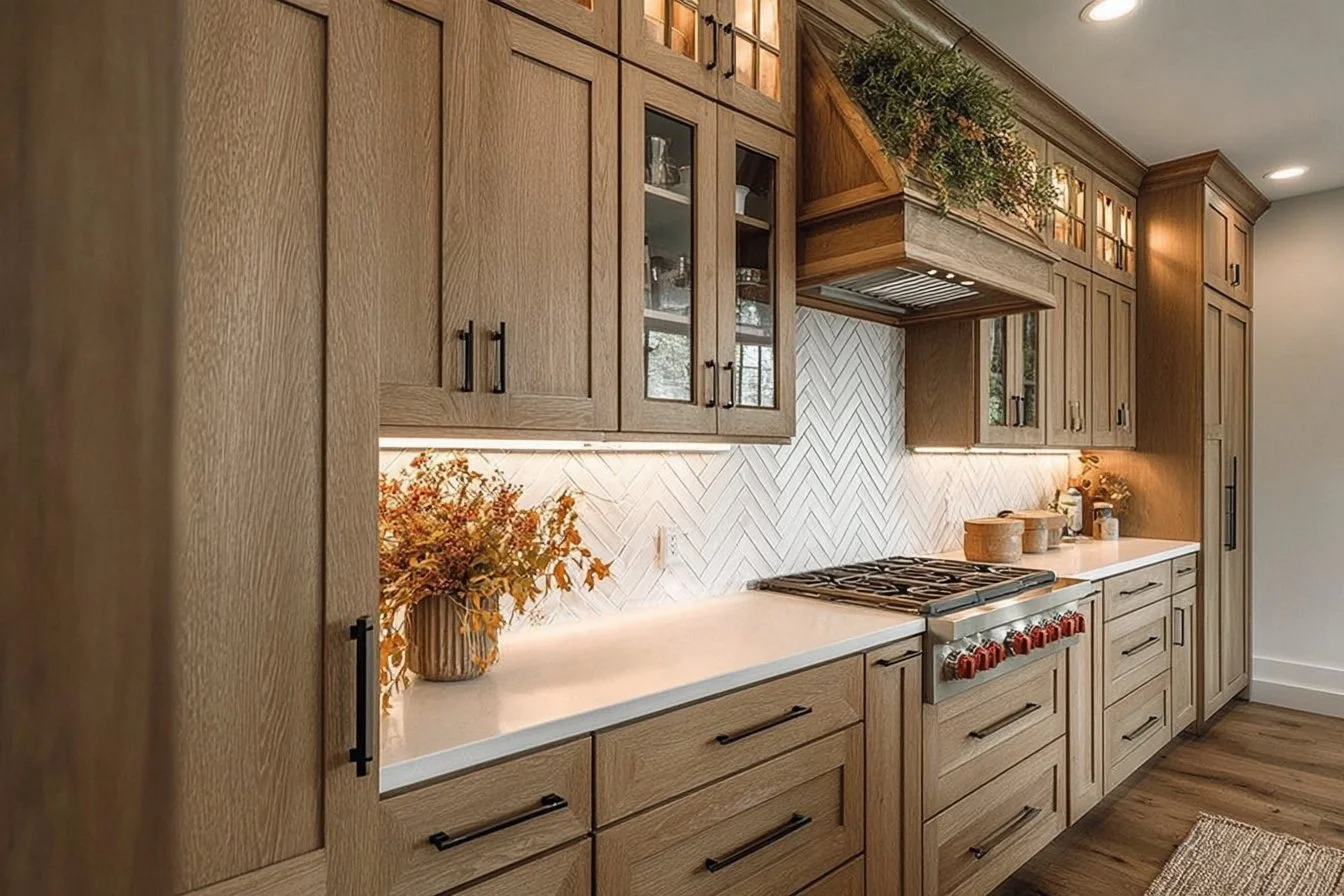
Shaker-style light brown cabinets bring a sense of calm without fuss. The clean lines and modest panels keep the kitchen looking tidy even when homework papers pile on the counter. Visually, the simplicity lets countertops and family photos stand out, which is great for a busy household where messes happen but style matters. Emotionally, this finish reads welcoming and lived-in — perfect for weekday breakfasts and weekend pancake rituals. To apply it, choose a matte or low-sheen lacquer to hide fingerprints, add soft under-cabinet lighting, and pick drawer inserts for school supplies and snack organizers so everything has a place. For parents juggling carpools and afterschool clubs, this approach balances durability and warmth, making interior styling tips feel practical rather than pretentious.

Two-Tone Contrast with Light Brown and White

Pairing light brown lower cabinets with crisp white uppers brightens the space and keeps things open for small families. This pairing works visually because it grounds the room with warmth while the white reflects light, keeping the area cheerful during morning routines. Emotionally, it reads fresh and organized, which helps when you need calm at 7 a.m. Apply the look by painting uppers in a soft white and choosing a light brown for base cabinetry; repeat the brown in bar stools or a shelf to tie the room together. Adding open shelving near the breakfast nook displays kids’ artwork and keeps everyday dishes within reach. If your block likes to compare weekend projects, this combination delivers decorating inspiration that neighbors will admire without feeling over the top.

Natural Woodgrain and Brass Accents for Comfort

Letting the natural grain show in light brown cabinets adds texture and personality that photographs beautifully for a Pinterest-savvy makeover. The visual depth of real wood appeals emotionally because it feels authentic — like a family heirloom updated for modern life. Pair warm brass pulls and a matching faucet to elevate the look without losing hominess. To apply, choose a sealed wood veneer or engineered wood with a visible grain pattern and invest in quality brass hardware; it ages gracefully, developing a story as the kids grow. This style invites tactile routines: little hands tracing knots in the wood, grandparents admiring the finish, and quick coffee moments at the counter. For moodier accents or seasonal shifts, you can draw inspiration from darker palettes and see how they translate into kitchen-focused interior styling tips like those that explore moody accents and textures at times.

Rustic Meets Modern: Reclaimed Look with Clean Lines

Blending reclaimed light brown cabinetry with modern hardware gives you charm without clutter. Visually, the worn edges and subtle imperfections contrast with sleek counters, creating a balance between lived-in warmth and contemporary efficiency. Emotionally, it suggests a curated life where family stories are visible, not hidden. Apply this by choosing cabinet fronts with a distressed finish and pairing them with minimalist pulls, quartz counters, and a smooth tile backsplash that’s easy to wipe down after craft projects. Keep one lower cabinet dedicated to art supplies or baking tools so the kids know where everything lives. This approach offers decorating inspiration for those who want character along with clean usability, and it photographs well for those pin boards you and friends share.

Statement Islands and Mixed-Tone Cabinets

Making your island a different shade of light brown from surrounding cabinetry creates a focused gathering spot for homework, snacks, and weekend homework sessions. Visually, the contrast defines zones within an open kitchen and adds depth without dramatic color changes. Emotionally, it becomes the heart of family life — the place where math gets checked and stories get told. To apply this at home, choose a slightly darker or lighter brown for the island and add seating that invites lingering, like cushioned stools that survive sticky fingers. Consider under-island shelving for school backpacks and charging stations, keeping daily routines smooth. This layout blends practical interior styling tips with family needs, making every day feel easier and more intentional.

Glass Fronts, Mixed Materials, and Texture Play

Light brown cabinets with glass-front uppers or mixed-material insets bring sophistication while staying approachable. Glass doors break up cabinetry blocks and showcase favorite dishes, trophies, or kids’ pottery, which adds warmth and personality. Combine materials — wood, metal, and stone — to add tactile interest so the kitchen never feels flat. Emotionally, it encourages pride and display: a space that celebrates small victories like a child’s art or a neighbor’s cookie tin. To apply, swap a few upper doors for glass, use seeded or frosted panes if you want less clutter, and introduce textured backsplashes that complement the brown tones. Small touches like linen towels or a woven basket for produce create a cozy vignette where family life naturally unfolds and invites continued decorating inspiration.

Conclusion

If you want professional help pulling these ideas into a cohesive plan that fits your family’s daily rhythm, consider reaching out to experts who can tailor cabinetry and islands to your needs. For a full-service option, check Let Us Create The Perfect Kitchen Cabinets and Island for You. Save the ideas that resonate, try one small change this weekend, and come back later to mix and match looks as your family grows and routines shift. For more unexpected styling cues, you might enjoy exploring how a cozy, eclectic vibe translates across the home with resources like moodier kitchen styling ideas and textural inspiration from boho bathroom textures.

Categories
Valentine’s Day

10 Valentine Table Decorations for a Memorable Evening

10 Romantic Table Setups to Melt Hearts

I still remember the evening my neighbor brought over a vase of carnations after a long week; the kids were in their pajamas, my son juggling a stuffed dinosaur and my daughter arguing about who got the last cookie. Life in my forties is full of comforting little routines: school drop-offs, soccer practices, and lazy Saturday pancakes. Those small acts of care—pouring extra syrup, tucking in a note into a lunchbox—are the reason I love turning ordinary dinners into moments that feel special. When I set the table for a cozy family night or a quiet date after the kids are asleep, it’s about warmth, memory, and inviting everyone in. Decorating the table has become my way of stitching together home life and celebration, whether the kids help place napkins or my husband lights the candles.

1 — Candle Glow and Soft Textures

Soft candlelight changes a room in seconds. Place a mix of taper and votive candles down the center of the table, interspersed with small bowls of rose petals or loose greenery. The warm light flatters faces and creates a hush that feels intimate even in a busy household. Use linen napkins or a textured runner to add a tactile element that invites touch; kids love to pat and smooth fabric, and that small interaction makes the setting feel lived-in. For safety, choose battery-operated candles when little hands are around. This setup works visually because it layers light and texture, and emotionally because it signals care without fuss. At home, I let my daughter arrange the petals while I fold napkins; it becomes part of the ritual rather than an extra chore.

2 — Playful Color Pop with Simple Centerpieces

A bold pop of color can transform an ordinary table into something Pinterest-worthy. Pick one accent color—deep pink, coral, or even a rich burgundy—and echo it through napkins, a single floral arrangement, and a few place settings. Keep the centerpiece low so conversation stays easy; a cluster of mason jars tied with ribbon and filled with mixed blooms gives a cheerful, casual vibe. This idea works visually by creating a focal point that ties everything together, and emotionally by evoking joy and vibrancy. At home, I let my son choose one bloom to place in each jar; his proud grin when he sees the finished table makes the whole effort feel worthwhile. It’s an accessible styling tip that doesn’t require professional tools.

3 — Romantic Geometry with Plates and Chargers

Layering plates and chargers is an interior styling tip that instantly looks refined. Choose a patterned charger or placemat and top it with a coordinating plain plate to create a chic geometry. Add a small heart-shaped cookie or a hand-written name card to personalize each spot; my kids love finding their names at the table like a mini treasure hunt. The visual appeal comes from contrasts in shape and pattern, while the emotional pull is in the personal touch. To apply this at home, mix affordable chargers with everyday dinnerware and let a favorite baking project double as décor. This approach makes the meal feel intentional without being finicky, and it’s something even a busy parent can pull off in under 20 minutes.

4 — Greenery Runner with Sentimental Notes

A runner made of fresh or faux greenery looks luxe but feels very relaxed. Lay eucalyptus or simple boxwood along the center and tuck in tiny handwritten notes or memories for each guest. The scent of eucalyptus adds a subtle, calming aroma that makes the experience multi-sensory. Visually, the greenery creates a long, natural line that draws the eye down the table; emotionally, the small notes offer connection and surprise. At our house, I hide a compliment for each family member and watch them read aloud between bites—those shared smiles are better than any centerpiece. This styling is budget-friendly, kid-friendly, and perfect for adding meaning without cluttering the table.

5 — Vintage Finds and Mixed-Match Charm

Combining mismatched glassware and vintage plates gives a homey, collected-over-time feel. Hunt in thrift stores or family cupboards for unique pieces: a chipped goblet here, a floral saucer there. Pairing old and new prevents the setting from feeling too formal while still looking thoughtfully styled. The visual interest comes from unexpected pairings, and emotionally it evokes nostalgia and stories—my mother-in-law’s chipped teacup sparks a hundred memories. To recreate this at home, mix one heirloom piece with your regular set and balance it with modern linens. Kids enjoy spotting “special” dishes, and it’s an easy way to make family dinners feel like an occasion without breaking the bank.

6 — Minimalist Monochrome with Texture

A monochrome palette, such as all-white or soft blush, reads as elegant without being fussy. Layer in texture through woven placemats, matte ceramics, and a single sculptural vase. The simplicity keeps the focus on faces and food, and emotionally it feels calm and cohesive—perfect after a hectic day of school runs and errands. At home, I swap out bright toys for a neutral table basket that holds utensils and napkins; the contrast between busy playtime and the calm table makes the meal a true pause. This interior styling tip is great for those who prefer understated elegance and want a setup that highlights connection over decoration.

7 — Food-First Styling with Edible Accents

Design the table around the food by using edible elements as décor. A board of cheeses and fruits makes a beautiful centerpiece, and sprigs of herbs tucked under napkin rings add color and scent. This approach is practical and gorgeous: guests can graze while admiring the arrangement, and kids can nibble while waiting for the main meal. Visually, edible accents create layers and variety; emotionally, they bring a sense of abundance and comfort. At our table, assembling the board becomes a family task—my son arranges grapes, my daughter lines up crackers—and the activity doubles as bonding time. It’s an interior styling tip that saves time and reduces waste because everything is meant to be enjoyed.

8 — Fairy Lights and Place-Specific Details

String small fairy lights down the center in a loose wave for an instant cozy atmosphere. Combine the lights with place-specific details like mini frames holding a favorite family photo or a small favor tied to each napkin. The twinkle reads as festive without being over the top, and the personal items make every seat feel honored. Visually, the lights add depth and sparkle; emotionally, the personal touches encourage conversation and memory-sharing. For safety, keep lights away from real candles and use battery-operated options. In our home, the kids love counting the tiny lights before we begin dinner, and it becomes a sweet little ritual that signals family time is starting.

9 — Layered Textiles and Kid-Friendly Stations

Use layered textiles to define zones at the table—placemats, a runner, and napkins in complementary hues. Add a small kid-friendly station at one end with crayons and a craft placemat so children feel included without crowding the table. The textiles create visual interest and a sense of warmth; emotionally, the kid station gives children ownership of part of the evening and reduces fidgeting. At home, I let my daughter pick a placemat pattern while I set the adult side more formally; this small negotiation leads to cooperation and fewer interruptions during the meal. This decorating inspiration blends practicality with beauty, keeping both style and family needs in mind.

10 — Statement Centerpiece with Low Height

Choose one statement centerpiece that stays low and dramatic, such as a wide, shallow bowl filled with floating candles and flower petals or a compact floral dome. The idea is to have drama without blocking sightlines. A single, strong focal point simplifies the rest of the styling, making everything feel cohesive. Visually it anchors the table, and emotionally it creates a theater-like moment when you light candles or reveal the arrangement. At home, we dim the lights and let the kids help light the battery candles, turning a simple action into a shared experience. This decorating inspiration is perfect for a parent who wants impact with minimal fuss.

Conclusion

If any of these ideas spark your imagination, save the pin and try one at your next dinner; small changes like a textured napkin or a low centerpiece can make ordinary evenings feel memorable. For more curated inspiration and easy how-to tips, check out Romantic Valentine’s Day Table Decor | eFavormart and adapt ideas to your family’s rhythms and favorite memories.

Categories
Kitchen

Warm Beige Kitchen Ideas That Feel Effortlessly Chic

I still remember the first time my kids and I painted cabinets together—Peanut and Rosie, aged ten and eight, tracking tiny flecks of paint like confetti down the hallway as the neighborhood moms waved from their porches. Mornings are a choreography of lunchboxes, soccer carpool, and science projects spread across the counter, so my kitchen has to be both cozy and forgiving. I’ve borrowed a trick from a charming remodel I once loved in a quaint California cottage to make our space feel calm and practical without losing style, and that blend of family life and design is exactly where home décor ideas begin to feel personal. If you ever want a little pinspiration for a kitchen that holds homework, hurried breakfasts, and a neighbor’s casserole, this collection of approachable interior styling tips will help you bring warm beige tones to life while keeping the heart of your home organized and beautiful. For a more postcard-perfect vibe, peek at some California kitchen inspiration for ideas that pair well with beige cabinets: quaint California kitchen inspiration.

Soft Two-Tone Beige and White

A two-tone approach pairs warm beige lower cabinets with crisp white uppers to create visual balance and airiness. Visually, the contrast keeps the eye moving and prevents beige from feeling flat, while emotionally it reads as soothing and familiar—ideal when you’re juggling homework and dinner at once. Realistically, paint the uppers in a semi-gloss white for easy cleaning and choose a durable matte beige for the lowers to hide scuffs from little feet. Add brushed nickel or soft brass pulls that are family-friendly to grip, and keep a few open shelves for the kids’ snack bowls so they can reach them safely. This scheme also adapts well if you want to update countertops later; white uppers act like a neutral frame, so you can swap surfaces without redoing cabinets. For more cozy decorating inspiration that translates to family life, check out these warm home touches and heartfelt styling tips: cozy heartfelt decor ideas.

Beige Shaker Cabinets with Natural Wood Accents

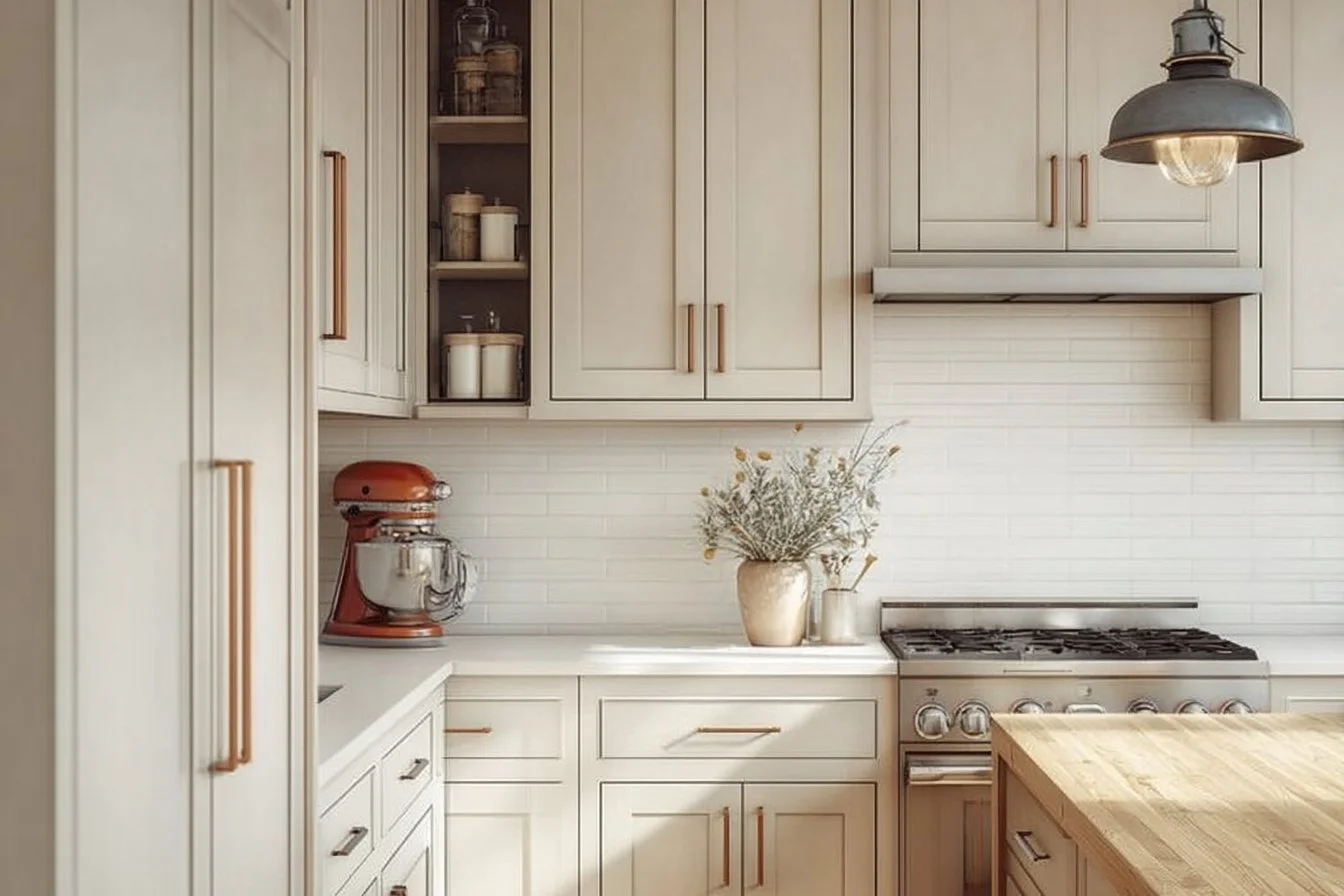
Shaker-style beige cabinetry brings timeless lines and a soft, cottage-like charm that’s easy to live with. The simplicity of the recessed panel design visually calms a busy family kitchen and pairs beautifully with natural wood countertops or floating shelves, which add texture and warmth. Emotionally, wood accents remind us of family meals and handmade crafts, making the kitchen feel lived-in and welcoming. Apply this at home by choosing wide-plank wood for an island or shelf, sealed for durability against spills and crafts. Keep the rest of the palette muted—soft greens or pale blues on accessories—to let the beige and wood breathe. Parents will appreciate how the Shaker silhouette hides fingerprints and stands up to daily use, while kids love having a low shelf to display their latest kindergarten art without cluttering counters.

Matte Beige with Bold Black Accents

A matte beige finish is understated and forgiving, and when you introduce black hardware or a black faucet, you get a modern statement that still feels warm. The visual drama of black against beige creates a clean silhouette and anchors the space—helpful when you need a focal point during hectic mornings. For a practical application, swap all cabinet pulls to black and choose a matte black sink or faucet; these elements are durable and disguise water spots better than shiny finishes. Emotionally, the contrast signals thoughtful design and gives you a grown-up backdrop for family gatherings, where dishes and kids’ crafts won’t visually compete with the cabinetry. Pair with woven placemats and a few framed family photos on a shelf to keep the space personal without sacrificing style.

Glass-Front Uppers and Open Shelving Mix

Combining glass-front uppers with open shelving adds depth and personality to beige kitchens while making everyday items accessible. Visually, glass softens the blockiness of cabinets and catches light, which is great around breakfast time when everyone’s gathering. Emotionally, it creates a little stage for Grandma’s china or the kids’ favorite cereal bowls, turning functional storage into a display of family life. To implement this, replace selected upper doors with glass and install a couple of low, sturdy open shelves where kids can reach cups. Keep dishware organized by color or pattern to avoid a cluttered look, and use clear containers for staples so everything feels purposeful. This setup encourages kids to help with setting the table and makes clean-up a cooperative moment instead of a chore.

Textured Beige Finishes and Subtle Pattern Play

Textured cabinets or a lightly patterned backsplash introduce tactile interest without overwhelming a family kitchen. A soft sand or linen finish on beige cabinetry offers sophistication while hiding the small scratches and smudges that come from everyday life with kids. Visually, texture adds depth and keeps large expanses of beige from feeling monotone. To apply this at home, consider a subtle raised panel or a hand-applied glaze that emphasizes grooves and shadow. Pair with a patterned tile on the backsplash—nothing too busy, perhaps a soft geometric in neutral tones—to inject personality. Emotionally, these layers read as intentional and comforting, like a favorite sweater in the laundry pile; they make the room feel curated but still ready for the inevitable spilled juice or hurried pancake-making mornings. For compact areas, ideas from small-scale chic spaces can translate surprisingly well into textured treatments: small-space chic restroom ideas.

Conclusion

If you want a kitchen that feels lived-in, stylish, and genuinely family-friendly, warm beige cabinets offer a versatile backdrop that works with many decorating inspirations. From two-tone schemes to textured finishes, these interior styling tips can help you create a calm, functional kitchen where school projects and slow Sunday breakfasts both feel right at home. Save the ideas that resonate, try one change at a time, and let your kitchen evolve with your family. For a full gallery of ideas that inspired this roundup, explore 36 Astonishing Beige Kitchen Cabinets Ideas for a Chic Look.

Categories
Kitchen

Timeless Earthy Brown Interiors – Direct Paint

Cozy Brown Home Styling Ideas to Love

I still remember the afternoon my son and daughter tracked muddy shoes through the entryway while I was trying to finish dinner, and how our neighbor stopped by with a warm pie and a compliment about our living room. At forty-two, life is a steady loop of school drop-offs, science projects, and weekend soccer. My home has to hold all of that chaos and the quiet moments in between, like late-night story time curled on the sofa. Over the years I learned that certain colors and textures anchor a household, making it feel calm even when shoes are everywhere. That quiet reassurance is what drew me to earthy brown palettes and practical styling choices that welcome everyday family life without sacrificing style or comfort.

Warm Walnut Walls for Lasting Comfort

A deep, walnut-toned wall creates a cozy backdrop that makes furniture and family photos pop visually while calming the room emotionally. Warm brown paints absorb light just enough to soften harsh daylight and add a sense of security when kids tumble through after school. Choose a mid-tone brown for living areas so the space reads rich but not cavernous, and keep trims lighter for contrast.

Applying this at home is simple: paint a single wall behind a sofa or bed to create a focal point that hides scuffs and shows less dirt than pale shades. Pair with washable paints for easy maintenance during crafting sessions or sticky-finger moments. The color also works beautifully with the tones of wooden toys and well-loved blankets, helping a busy household look curated without much effort.

Layered Natural Textures That Tell a Story

Layering textures like linen curtains, jute rugs, and wool throws makes brown interiors feel lived-in and inviting instead of flat. These natural materials age gracefully, which is perfect when kids leave little marks that become part of your home’s story. Textural contrasts highlight the brown palette, creating depth and touchable surfaces that family members naturally gravitate toward.

Start small by swapping a slick cushion for a nubby linen pillow or adding a woven basket by the door for backpacks. These swaps give you visual interest and durable solutions for daily life, such as a place for sports gear or art supplies. The result is a comforting aesthetic that supports family routines and sparks decorating inspiration without needing constant upkeep.

Timeless Wood Furniture for Real Life

Solid wood pieces in oak, walnut, or smoked finishes pair naturally with earthy brown walls and create a cohesive, timeless look. Wood hides wear and can be refinished, which is a practical advantage when you have kids drawing on surfaces or balancing school projects. Choosing classic lines over trendy shapes keeps a room feeling calm and adaptable as your family grows.

Use a sturdy wooden dining table as the household command center—homework, meals, and crafts all happen here. Mix in storage benches or low shelves to keep clutter at bay and give kids a place to put their things. The tactile warmth of wood invites hands and feet, making your home feel like a lived-in sanctuary rather than a staged room.

Soft Lighting to Create Calm Corners

Lighting transforms brown interiors from moody to cozy. Warm bulbs and layered fixtures like floor lamps, table lamps, and dimmers let you tailor the ambiance to homework time, movie nights, or quiet reading. When the kids are doing puzzles on the floor, a soft lamp creates a gentle island of light that feels intimate and peaceful.

In practice, add a lamp near the reading nook and a pendant over the dining table for task lighting. Use dimmers or smart bulbs so you can lower brightness without getting up from a parenting moment. Lighting choices also impact how brown hues read: softer light enhances warmth and makes the whole house feel more inviting during busy evenings.

Greenery and Simple Accents That Breathe Life

Plants and small accents brighten brown interiors with fresh energy and movement. A few easy-care plants like pothos or snake plants add vertical interest and naturally break up brown tones without shouting for attention. Family photos in warm-toned frames, ceramic bowls, or woven trays add personal touches that make a house feel like a home.

Place plants out of reach on higher shelves or in weighted pots that won’t tip during rough-and-tumble play. Rotate small accents seasonally or when you want a fresh mood to inspire new routines, like creating a painting station on a side table. These subtle additions support a lived-in look that welcomes family life and sparks ongoing decorating inspiration.

Conclusion

If you want more examples and real-room visuals to spark your next refresh, explore the curated examples in Direct Paint’s gallery for ideas you can adapt to family life. For more home décor ideas and interior styling tips, see this collection of Direct Paint’s earthy brown interiors gallery to save and try at home. Save the ideas you love and come back when you’re ready to make a change; small, intentional shifts can turn daily chaos into comforting, stylish spaces.

Categories
Valentine’s Day

Charming Valentine Home Makeovers to Wow

I still remember the year I tried to juggle carpools, homework, and a surprise neighborhood bake sale while sneaking in a little holiday magic. Mornings start with cereal negotiations and chasing backpacks, and evenings are built around piano practice and a ritual walk with our golden retriever where we chat with the neighbors over hedges. My two kids, ages 8 and 11, adore anything that feels festive and cozy, and I love moments that make our house feel intentionally cared for without derailing the routine. That’s why small, heart-filled decor projects became my secret: quick to assemble, big on feeling, and something the whole family can admire together. Over the years I’ve refined a few go-to approaches that transform everyday rooms into warm, inviting spaces that still fit our busy life and love of simple gatherings.

Front Door Charm: Heart Wreath and Layered Mats

A welcoming entrance sets the mood for everything inside. A fresh or faux heart wreath centered on the door reads as cheerful and intentional, creating an immediate emotional lift for family, friends, and those friendly neighbors who peek in on walks. Paired with a layered welcome mat in neutral tones and a subtle pop of red or pink, the entryway looks curated without feeling overdone. Visually, the wreath provides a round focal point that balances vertical siding or glass panels. Emotionally, it says you care about home and hospitality. At home, swap in ribbon or hand-cut paper hearts if kids want to help; they love choosing colors. For practicality, choose weatherproof materials and hang the wreath with an over-the-door hook. This approach is a top home décor idea because it’s inexpensive, kid-friendly, and makes every return to the house feel a little sweeter.

Mantel Magic: Sweet Vignette and Family Photo Garland

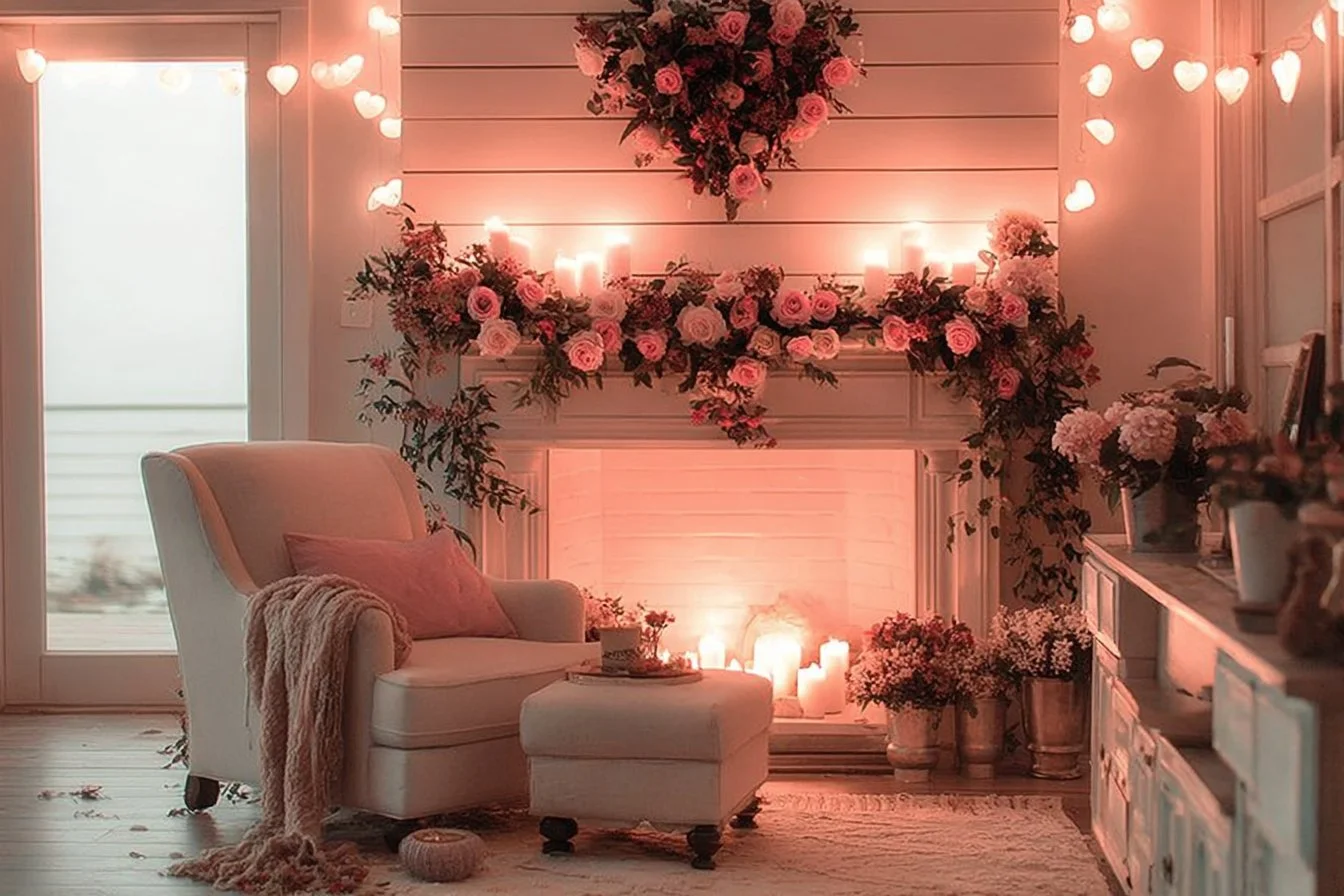
A mantel is a storyteller’s stage. Create a small vignette with mixed heights: a cluster of taper or battery candles, a ceramic vase with seasonal blooms, and a framed family photo. Add a paper heart garland created from your kids’ artwork to personalize the space. This combination works because it layers texture and memory, making the mantel feel like a curated collection rather than a display of store-bought kitsch. From an interior styling tips perspective, vary heights and materials to maintain visual interest and guide the eye across the shelf. To apply this at home, let one child pick the flowers and the other arrange the garland; it becomes part of your evening routine. The result is a cozy focal point that encourages family stories and looks lovely in photos for sharing on social feeds.

Table Centerpiece and Place Touches That Speak Love

A simple center can transform a meal into an event. Use mason jars or shallow bowls filled with a mix of seasonal flowers, greenery, and a few faux hearts for a low-effort centerpiece that still reads deliberate. Complement this with napkins tied by DIY heart napkin rings made from twine and cardstock. Visually, the combination creates rhythm on the table and warmth that invites lingering conversations. Emotionally, dinner becomes a tiny celebration, perfect for homework-free evenings or weekend breakfasts. To make it work in real life, choose short arrangements so conversations aren’t interrupted, and let the kids help fold napkins as a pre-dinner ritual. These styling touches are solid home décor ideas because they’re adaptable to everyday meals and special family moments without needing a lot of time or money.

Bedroom Glow: Soft Lighting and Romantic Accents

Transforming a bedroom is about mood. Add soft string lights above the headboard or place battery candles on bedside tables for a gentle glow that feels restful. Include plush throw pillows in heart shapes or with subtle Valentine tones to anchor the look. Visually, soft lighting creates depth and a warm palette that makes colors pop; emotionally, it signals relaxation and comfort. For families, keep cords out of reach and use LED options to ensure safety around kids. In our home, soft lighting becomes quiet-time permission after a busy day. These interior styling tips are easy to incorporate: swap out one pillow cover, add a string light, and you’ve changed the atmosphere without an overhaul. It’s a peaceful way to weave decorating inspiration into nightly routines.

Kid-Friendly Crafts as Decor: Paper Garlands and Keepsake Art

Kids love contributing, and their creations make decor more meaningful. Paper heart garlands, finger-painted heart canvases, or footprint heart art are charming and double as keepsakes. These crafts work visually because imperfect handmade pieces bring texture and authenticity that manufactured items can’t match. They also carry emotional weight—the proud grin when a child sees their work displayed is priceless. To include this at home, set up a short craft session at the kitchen table with washable paints and styled templates, then hang finished pieces across a window or along a bookshelf. This practice of making together becomes a simple family tradition and a source of constant decorating inspiration that updates with every school project or weekend craft day.

Living Room Accents: Cozy Throws and Mini Displays

Small accents make living rooms feel intentional. Swap a couple of throw pillow covers to introduce seasonal hues, and create a tiny vignette on a coffee table with a stack of favorite books, a small bowl of conversation hearts, and a framed quote. These accents are effective because they work within existing color schemes and add just enough novelty to pique interest. Emotionally, they invite cuddles, movie nights, and board games with the kids. When applying this at home, let one child pick a pillow and another arrange the books; it becomes a shared task that keeps the space familiar. These home décor ideas are practical for families because they’re reversible and affordable, letting you refresh the room in minutes for special occasions or simple Friday nights.

Conclusion

I hope these approachable decorating ideas give you fresh creativity that fits into your family life. If you liked the idea of using photography-style accents or want inspiration for staging a small holiday shoot at home, explore these Valentine’s photography set decor ideas for visual cues and props that complement everyday decorating inspiration. Pin a few favorites, try one project with the kids, and come back when you’re ready for more interior styling tips that make your home feel loved.

Categories
Valentine’s Day

Cozy Photo Wall Refresh Ideas

I still remember the morning my youngest decided the living room should look more like his bedroom, armed with a stack of crayon masterpieces and a fierce determination. Between packing lunches, taxiing to soccer practice, and swapping casserole recipes with the neighbor who saved my life with a slow cooker years ago, I find small moments to make our house feel like ours. Two kids, ages eight and eleven, leave traces everywhere — a Lego on the rug, a muddy handprint on the stair, and a favorite snapshot taped to the fridge. Those little marks of daily life are why I love quick, meaningful ways to display family memories. Lately I’ve been playing with simple photo displays that make the hustle feel curated, turning ordinary corners into warm spots where everyone pauses just a little longer.

Clustered Frames for a Warm Focal Point

A tight cluster of frames creates a strong focal point without overwhelming a room. Visually, varying frame sizes but keeping a consistent color palette gives the eye a place to rest and tells a family story at a glance. Emotionally, a cluster feels intimate, like a conversation wall where each photo is a voice. To do this at home, pick a wall near the sofa or hallway and lay frames out on the floor until the composition feels balanced. Use paper templates before hammering nails for a stress-free install. Include a mix of candid shots and a few posed portraits so every family member recognizes themselves in the story. I swap one or two photos every few months to reflect small wins — a piano recital, a soccer goal — which keeps the display feeling fresh without a big overhaul.

Gallery Ledge for Easy Swaps and Kid Art

A gallery ledge is a relaxed solution when life is busy and kids create non-stop. The ledge provides depth and lets you layer frames, small plants, and the occasional school project. It works visually by adding horizontal lines that calm a room, and emotionally it invites family participation because little hands can help rearrange. Install the ledge at a height the kids can reach for rotating the spotlight piece. Keep one or two shallow baskets nearby for seasonal drawings so nothing gets lost. I often let my kids choose a rotating centerpiece — last week it was a watercolor dinosaur — which makes them feel proud and teaches them how to curate. With a ledge, you get a living gallery that evolves with your family, ideal for busy mornings and spontaneous afternoon crafts.

Uniform Matting for a Calm, Cohesive Look

Uniform matting and similar frame styles make a chaotic mix of photos feel harmonious. This approach works visually by creating consistent breathing room around each image, which turns a group of snapshots into a cohesive design. Emotionally it offers calm, which I appreciate after a long day of carpools and emails. To apply it, choose a single mat color and frame finish, and reprint a selection of your favorite photos at a standard size. Keep a photo swap box in a closet so you can rotate images without clutter. I paired this idea with a small side table where my kids drop daily drawings; the contrast between neat frames and joyful mess creates a lived-in elegance. This styling trick is budget-friendly and looks intentional even when life is wonderfully imperfect.

Mix Photos with Found Objects for Texture and Memory

Interspersing photos with small objects — a seashell from a family trip, a thrifted brass candleholder, a child’s first clay heart — adds texture and personal history to a wall. Visually, the mix prevents monotony and adds layers that invite people to look closer. Emotionally, each object carries a memory that complements the photo’s story. Start with a narrow shelf or a shallow shadow box and arrange photos alongside objects at varying heights. Include handwritten notes behind some frames to uncover later; this little secret feels like a family time capsule. On weekends my neighbor and I trade small finds for our walls, which keeps both our homes feeling curated and connected to the community. This technique helps your decor reflect a life well lived, not just a Pinterest page.

Digital Frames for a Dynamic, Low-Maintenance Gallery

A smart digital frame turns a pile of photos into a moving, living display. Visually, the soft transitions and slide timing create an ambient backdrop that changes without effort. Emotionally, seeing a rotation of moments — school concerts, neighborhood walks, candid laughs — brings constant reminders of what matters. Choose a frame with easy Wi-Fi syncing and a simple app so the whole family can add new images from their phones. Mount it at eye level in the kitchen or entryway where it can be enjoyed during daily routines. I like to schedule a weekend upload ritual with my kids: we pick a theme, like “funny faces” or “summer walks,” and everyone contributes. Digital frames reduce paper clutter and keep storage simple, while still honoring the everyday moments that make a house feel like home.

Kid-Friendly Clip Zones for Proud Displays

A low-height clip system or wire with clothespins is a kid-approved way to display artwork, certificates, and favorite photos. This idea works visually by introducing a playful, linear display that breaks up flat walls, and emotionally it builds confidence because children see their work celebrated. Install the clips at a height they can reach and use sturdy materials so little hands can interact freely. Keep a small stool nearby for slightly taller kids, and designate a weekly “gallery update” time where each child swaps pieces. My kids love inviting neighbors over to see the latest additions, which creates community pride and turns our home into a lively showcase. The clip zone encourages creativity, is easy to update, and keeps the refrigerator from becoming the only gallery space.

Conclusion

If these ideas spark even one small change — moving a photo, hanging a ledge, or adding a clip line — you’ll notice how quickly a home feels more intentional. Save the pin you like best, try one idea this weekend, and let your family help shape the story on your walls. For simple, reliable photo backup and to keep all those rotating memories safe as you refresh displays, consider using iCloud+ photo storage features so your snapshots are always protected and ready to print.

Categories
Valentine’s Day

Intimate Bedroom Styling for Your Wedding Night

I still wake up to the sound of little feet padding down the hall and the smell of coffee brewing, juggling school lunches with a mental checklist of carpools and piano practice. As a mom in my forties with two kids between eight and twelve, my days are full of routines that feel cozy and a bit chaotic, from backyard lemonade stands to waving hello to the neighbor who waters our plants. Those ordinary moments make the quiet, private ones stand out even more. Lately I find myself thinking about the small rituals that mark big life moments, like the night two people finally get to close a chapter and open a new one together. That urge to create a calm, beautiful room at home led me down a rabbit hole of styling ideas that are simple enough for a busy family to pull off but special enough to feel like a celebration.

Soft Candlelit Ambiance

Soft lighting changes everything. A warm glow instantly adds intimacy and can transform even a familiar guest room into a romantic retreat. Visually, candlelight flatters skin tones and creates gentle shadows that make the space feel cozy rather than staged. Emotionally, it signals relaxation and slows down the day. At home, use battery-operated candles on a dresser and scatter a few tealights along a safe, flat surface away from curtains and kids’ reach. Pair them with a dimmable lamp so you can adjust the mood as the evening unfolds. As a mom, I love that flameless options let me set the scene without worrying about curious little hands later—neighbors might notice the soft light from outside and think you’ve captured something special, too. This approach offers decorating inspiration that’s low fuss but high impact.

Luxurious Bedding and Layered Textures

Plush bedding is an instant upgrade. Rich textures—think a soft duvet, velvet throw pillows, and a chunky knit blanket—create depth and invite touch, which matters more than you’d think on an emotional level. A well-made bed feels like a hug after a long day. Practically, aim for a neutral base with one or two accent colors to keep it timeless. Swap the kids’ favorite cartoon duvet on the guest bed for breathable cotton sheets and a heavier cover for cool nights. When my kids camp out during sleepovers, I appreciate bedding that washes easily yet still looks elevated for a special evening. Interior styling tips like layering different fabrics and keeping extra throws within reach will keep things cozy and family-friendly while delivering a distinctly romantic aura.

Draped Fabrics and Canopy Effects

Draped fabric over the headboard or a simple canopy creates an intimate nook that feels curated and private. The soft folds add movement and softness to the room while framing the bed as the focal point. Emotionally, fabric creates a sense of shelter and safety—perfect for a first night vibe. To achieve this at home, use a tension rod or lightweight hooks to hang semi-sheer curtains or a decorative scarf. Make sure the material is easy to launder in case little hands get curious. I once repurposed a lightweight curtain from our living room when my daughter wanted a fort; the same idea scales up beautifully for a grown-up night. Pair the canopy with subtle fairy lights tucked into the folds for a whimsical touch that feels special without being fussy.

Fresh Flowers and Subtle Scents

Scent is a powerful memory trigger, and fresh blooms instantly lift a room. A small bouquet on the nightstand or a single stem in a slender vase brings color, natural texture, and fragrance that reads as thoughtful and intentional. Visually, flowers add a delicate contrast to bold linens; emotionally, they suggest celebration. If you’re sensitive to strong perfumes, try a linen spray or a mild essential oil diffuser on a low setting. Practical tips: pick blooms that last several days, like roses or alstroemeria, and keep them out of reach of curious kids. I often keep a tiny posy by my bedside after a birthday—little moments like that feel celebratory and show how decorating inspiration can come from everyday rituals.

Personalized Details and Soft Lighting Accents

Personal touches tell a story. Framed vows, a simple printed photo from a favorite trip, or handwritten notes tucked under a pillow make the room uniquely yours. These details feel warm and intimate, encouraging connection. Visually they create points of interest without clutter. Try placing a small framed picture on the dresser, or write a short love note and slide it into a bedside book for your partner to find. Complement these with soft accent lighting like a bedside lamp with a warm bulb and a small string of lights on a shelf. As a mom, I love how simple personalization can coexist with family life; our home is full of memories from soccer games to school plays, and weaving a few grown-up mementos into the bedroom keeps the space feeling lived-in and authentic.

Calming Color Palette and Comfortable Flooring

A soothing color scheme sets the tone for the night. Muted hues like warm greys, soft blush, or sandy neutrals feel calming and make it easier to relax. Paired with a plush area rug underfoot, the room invites you to linger barefoot, adding a tactile element that comforts and grounds. From an emotional standpoint, soft colors reduce visual noise and help slow the mind—beneficial after a day of family activity. For practicality, choose washable slipcovers or rugs that repel stains for peace of mind when kids are around. We use a neutral rug in our hallway that handles muddy sneakers and still looks polished for guests. Interior styling tips like choosing durable materials ensure the space remains both beautiful and usable in a family home.

Conclusion

If you enjoyed these ideas, save a few for later and try one small change at a time—soft lighting, a new throw, or a floral touch can make a big difference. For affordable finishing touches that work well as little surprises, check out cheap wedding night gifts for wife Sale to find options that complement your decor without extra stress. Come back when you’re planning another cozy night; these home décor ideas and decorating inspiration are meant to be practical, family-friendly, and easy to adapt.

Categories
Kitchen

5 Timeless Monochrome Kitchen Looks

I still remember the weekend my neighbor dropped by with two muffins and a sketch of her tiny island. My youngest, age 8, insisted on wearing a superhero cape at breakfast while my 11-year-old practiced piano in the next room. Between carpools, homework, and PTA meetings, my kitchen has to do double duty: morning chaos zone, homework station, and the place where friends linger over coffee. Those little daily rituals taught me that a kitchen’s color story matters more than ever. Simple contrasts calm the eye after a busy day and make cleanup feel intentional. Over the years I’ve borrowed a few smart aesthetic tricks from other rooms, even tucking in a Scandinavian sensibility that keeps things airy and livable, which makes the whole family happy and the space feel like ours. Scandinavian style ideas helped me see how monochrome balance can feel warm instead of stark.

High-Gloss Black Cabinets with White Marble Countertops

A dramatic high-gloss black cabinet run paired with white marble countertops makes a kitchen feel polished and effortless without being fussy. Visually, the shine reflects light from windows and pendants, while the white counters anchor daily chores with a clean surface. Emotionally, the look reads like confidence — a space that’s both elegant and approachable when kids leave cereal streaks or a baking experiment goes sideways. To apply it at home, pick a durable honed or leathered marble alternative if you want less maintenance, and place kid-friendly prep zones on a white surface to hide wear. Keep lower cabinets black and upper shelves or a few open white niches to ease the contrast so your family doesn’t feel overwhelmed. Add soft textiles like striped towels or a woven runner to invite warmth and practical comfort for morning routines.

Graphic Tile Backsplash and Patterned Accents

A bold black and white backsplash is a quick way to introduce personality without committing to painted walls. Patterned tiles — think checkerboard, herringbone, or small geometric mosaics — create movement and draw the eye to the heart of the kitchen. These patterns work emotionally by turning daily tasks into little design moments; making dinner feels a bit more special when the backdrop is playful. Install the tiles behind the range or sink for maximum impact, and balance them with calm white cabinetry so the room stays light and family-friendly. If you love mid-century touches, look to simple geometric shapes and warm wood tones to soften the graphic edges, which is where a dash of mid-century modern inspiration can guide your lighting and hardware choices.

Two-Tone Cabinets: Black Island, White Perimeter

Two-tone cabinetry — a black island with white perimeter cabinets — gives depth and a natural focal point while keeping the overall feel bright. The island acts like a visual anchor and can hide the inevitable mess of craft projects, baking chaos, or homework spreads, while white cabinets around the edges keep the room feeling open. This arrangement works emotionally by signaling designated zones; children learn that the island is for gathering and the counters against the wall are for prep. To implement this, choose a durable, matte finish for the island to hide fingerprints and scuffs, and add family-friendly seating with washable cushions. A contrasting countertop on the island, such as warm wood or black quartz, helps tie the two tones together and creates a cozy place for quick breakfasts and late-night chats.

Black Accents with Warm White Shaker Cabinets

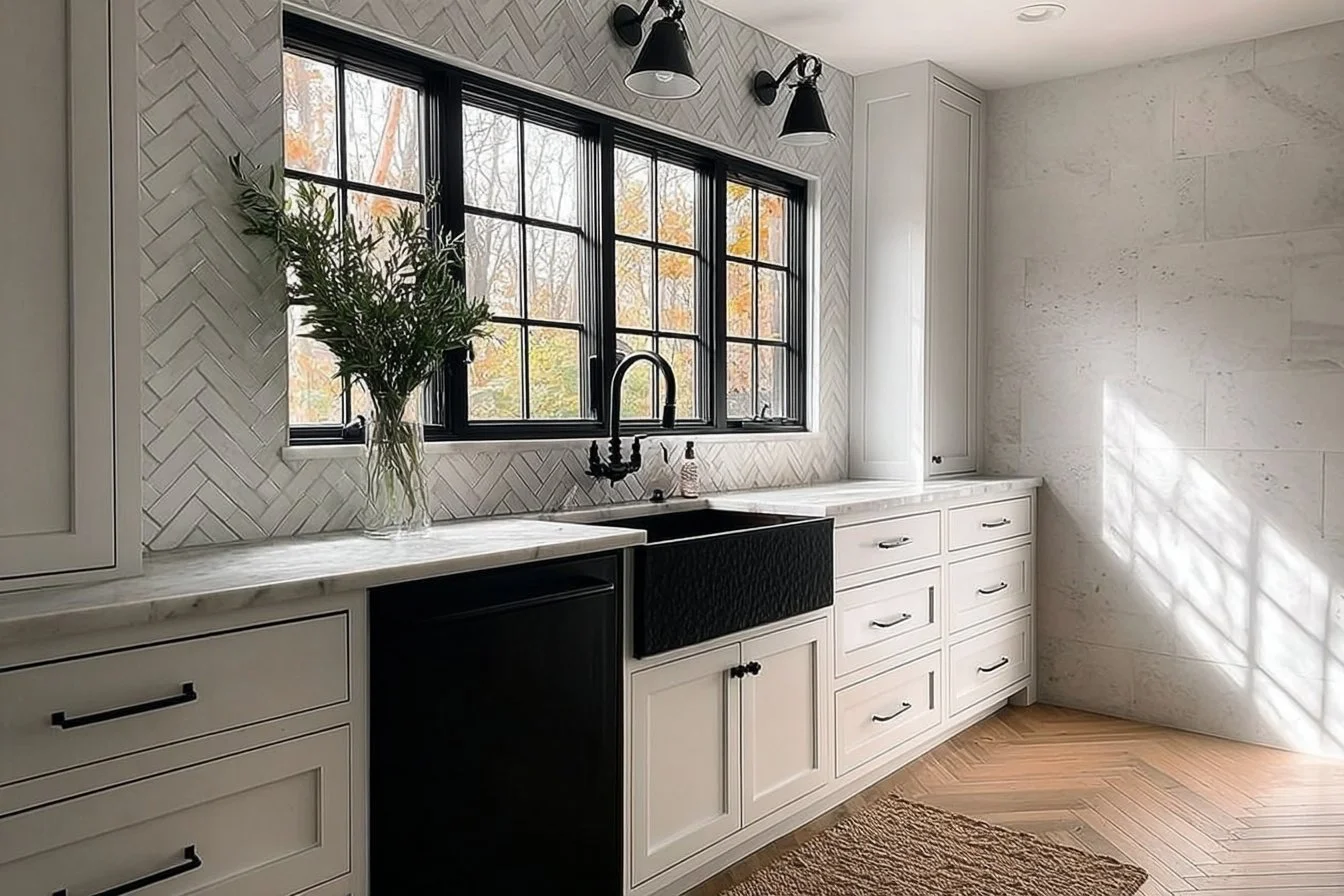
Classic shaker cabinets in warm white feel timeless and forgiving, and adding black accents — think hardware, faucets, light fixtures, and window frames — gives modern edge without losing comfort. This combo reads as curated rather than clinical; it supports lively family life because it masks smudges and feels lived-in. Visually, the black details punctuate the white canvas, creating rhythm and sophistication. Start small by swapping knobs, installing black task lighting, and painting a single window frame black to test the look. For a complete update, choose warm white paint that flatters skin tones and wooden floors, then layer black metal shelving or a framed chalkboard for grocery lists and kids’ artwork. If you want gentle contrast ideas for cabinet color and finishes, check out some tried-and-true warm white kitchen ideas to match family life with long-lasting style.

Patterned Floors and Cozy Monochrome Textiles

A patterned floor in black and white, such as encaustic tiles or a scaled checkerboard, gives the room personality underfoot and hides the small spills and crumbs that come with kids and pets. Patterned floors work emotionally by adding playful energy; they make every step feel intentional and encourage everyone to take pride in the space. For families, pair bold flooring with neutral lower-profile rugs near work zones to soften falls and contain mess. If full-tile feels permanent, consider patterned vinyl or peel-and-stick tiles in less-used areas to test the look. Layer textiles like black-and-white striped dish towels, geometric cushions on stools, and framed family photos in simple black frames to create warmth. This approach lets you enjoy a lively aesthetic that holds up to daily living while still feeling stylish when neighbors stop by for an impromptu coffee.

Conclusion

If you loved these monochrome kitchen ideas, you might enjoy exploring more backsplash-driven looks to find patterns that suit your family’s energy and routines; this round-up of 22 Stunning Black and White Kitchen Backsplash Design Ideas offers plenty of inspiration to pin, adapt, and make your own. Save a few looks, try one small change this weekend, and come back later to build on what feels right for your home — the best kitchens grow with the life lived inside them.