

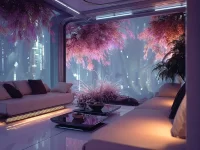
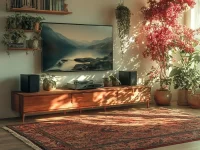
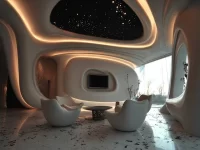
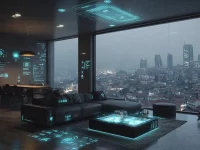
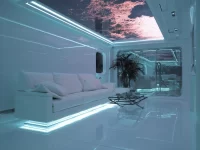
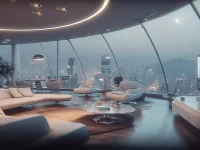
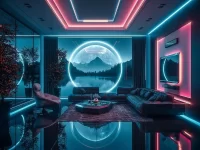
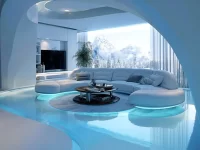
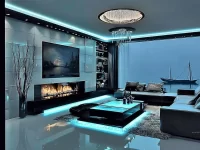
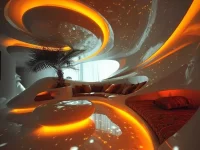
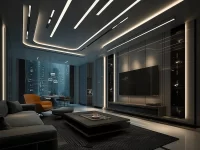
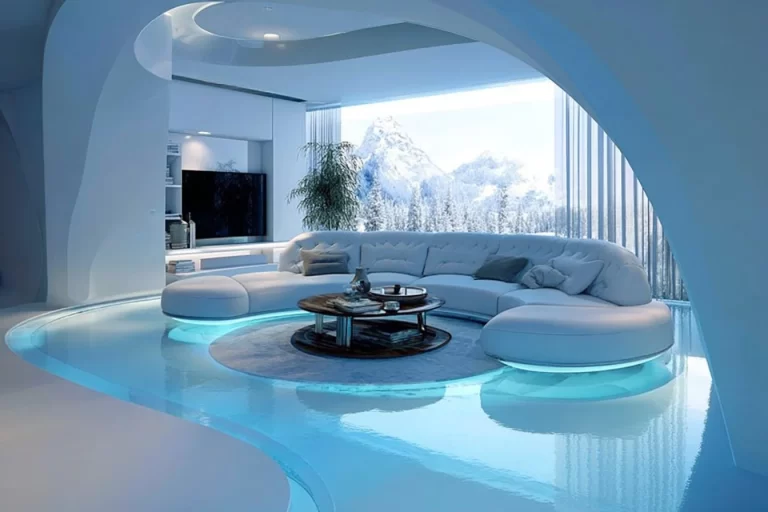

Imagine stepping into a living room that feels less like a room and more like a small habitat drifting among stars. “Stellar Galactic Escape” rethinks domestic comfort through the lens of speculative cosmology and forward-looking design. It blends immersive lighting, adaptive furniture, and subtle high-tech systems to create a space that’s equal parts sanctuary and observatory—an interior that honors both human scale and cosmic wonder.
A concept grounded in mood and narrative
The key to a successful futuristic living room is storytelling. This is not merely about high-end gadgets; it’s about crafting an emotional arc for the occupant. The Stellar Galactic Escape tells a narrative of quiet travel: slow movement, luminous horizons, reflective surfaces, and private vistas. Every surface, hue, and sound is chosen to suggest motion through space without inducing vertigo—calm propulsion, not chaos.
Palette, materials, and finishes
- Color: Deep indigo and graphite as base tones, warmed with meteor-ash grays and muted copper accents. Hints of bioluminescent teal or soft lavender function as accent lights rather than dominant color fields.
- Materials: Matte carbon finishes, anodized aluminum, recycled glass, and scalable smart textiles that adapt opacity and texture on demand. Use of reflective but diffused surfaces preserves depth without harsh glare.
- Textures: Soft, tactile fabrics mimic cosmic dust drifts and create a tactile counterpoint to sleek metals. A rug with a subtly gradient weave evokes a starfield underfoot.
Lighting and atmosphere
Lighting transforms a room into an environment. For the Stellar Galactic Escape:
- Layered illumination: Ambient ring lighting in the ceiling simulates a gentle halo; integrated floor lights create low-angle washes that lengthen the space.
- Dynamic sky panels: A central ceiling panel cycles through slow dawn-to-dusk gradients or abstract nebular formations—controlled manually or tied to circadian settings.
- Pinpoint lumens: Embedded “starlight” LEDs punctuate shelves and alcoves, delivering just enough sparkle to suggest distant points of interest.
Ambient sound design completes the atmosphere—sub-bass tones and soft harmonic pads that evolve slowly, giving a sense of motion without distraction.
Furniture that breathes and adapts
Futuristic furniture in this living room serves multiple purposes and adapts to the occupant’s needs:
- Modular seating: Low-profile, curved modular sofas can reconfigure to create intimate conversation pockets or a broad reclined view for media. Hidden actuators adjust lumbar and tilt silently.
- Convertible surfaces: Coffee and side tables incorporate touch-sensitive glass that transitions between opaque and transparent, revealing storage or serving as display screens.
- Floating media hub: A wall-mounted console houses projection systems and speakers within a slim frame, preserving negative space and emphasizing the room’s weightless aesthetic.
Attention to ergonomics ensures that even the most stylized pieces feel inviting and comfortable.
Technology—seamless, invisible, empowering
Tech in the Stellar Galactic Escape is designed to recede into the background while amplifying experience:
- AR/VR-ready zones: A comfortable nook equipped with haptic seating and ambient projection allows occupants to slip into virtual vistas—nebula tours, minimalist workspaces, or guided meditations.
- Smart surfaces: Tables and armrests recognize touch, gestures, and presence. They adjust temperature, display contextual information, or act as controls for lighting and audio scenes.
- Integrated sensors: Air quality monitors, circadian lighting controllers, and adaptive acoustics work together to maintain comfort and well-being.
- Energy autonomy: Photovoltaic glass panels on skylights, localized battery storage, and efficient HVAC systems keep the room running with minimal reliance on external grids.
Crucially, the interface emphasizes natural interactions—speech, gesture, and gaze—reducing friction and preserving immersion.
Sustainability and longevity
A true future-facing living room must be sustainable:
- Durable, recyclable materials extend the lifecycle of furniture and finishes.
- Modular systems encourage repair and upgrades rather than replacement.
- Passive design strategies—optimized insulation, daylight harvesting, and natural ventilation—reduce operational energy use.
- Biophilic touches like living wall segments and air-purifying planters balance the high-tech elements with living systems that promote health.
Sustainability becomes part of the narrative, expressing a responsible relationship with the broader environment—planetary and cosmic.
Experiential touches and personalization
Small details make the Stellar Galactic Escape feel personal:
- Memory settings recall favorite lighting and seating configurations tied to activities—reading, socializing, meditating.
- Curated projection sequences and a library of ambient soundscapes let residents dial into different moods: deep-space cruiser, coastal horizon, or cozy cabin under the aurora.
- Customizable display panes host digital art, family archives, or generative visuals that shift subtly over time.
These features create a sense that the room grows with its inhabitants, adapting to their evolving tastes and routines.
Practical considerations
Designing for the future must also be pragmatic:
- Keep wiring centralized and accessible for upgrades.
- Choose standardized modular components to future-proof investments.
- Consider acoustics early—soft materials and diffusers can prevent echo in spaces with hard surfaces.
- Ensure ample storage that hides tech without obscuring access.
Balancing aesthetics with practicality ensures longevity and everyday usability.
Conclusion
The Stellar Galactic Escape is less about gimmicks and more about reimagining domestic life through a lens of calm, thoughtful futurism. Its blend of adaptive furniture, subtle lighting choreography, integrated technology, and sustainable practice creates a living room that feels expansive without being empty—a place that invites quiet exploration and long-term inhabitation. For deeper inspiration on cosmological themes that can inform such designs, read about the future of an expanding universe.
0 Comments